The beer boot, from barracks bet to bar trophy
The glass boot has a famous origin story, a documented history that is rather different, and a second life that began in a comedy film. All three are worth having, and it helps to know which is which.
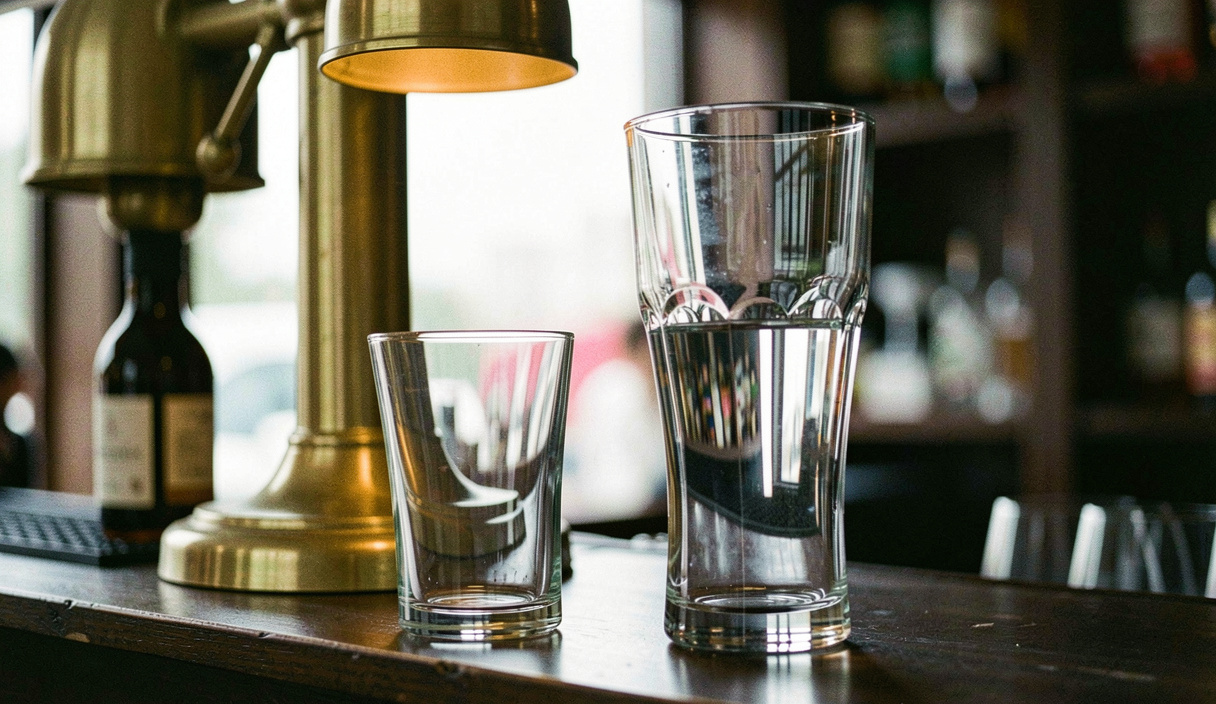
Ask anyone in a beer hall where the boot comes from and you will get the same story. A general promises his men that if they win the coming battle he will drink beer from his boot. They win. Rather than put his mouth anywhere near his own footwear, he has a glassmaker run him up a boot in glass, drinks from that, and keeps the promise on a technicality.
It is a good story. It circulates in a dozen versions, attached to a dozen different commanders and a dozen different battles, and it has no settled source. That is a reasonable description of a legend rather than a history, and the boot is more interesting once you set the legend to one side.
Leather came first
The part of the story that is solid is that drinking from footwear-adjacent leather is not an absurd invention. Leather drinking vessels were ordinary tavern equipment across northern Europe for centuries. The blackjack, a tarred leather jug, and the bombard, a larger version of the same thing, were in common use long before glass was cheap enough to drink from.
Leather was tough, it did not shatter on a stone floor, and it could be made by the same people who made everything else in the village. Glass was expensive, fragile and, for a long time, the province of the wealthy. A leather boot shaped vessel sits comfortably in that world; a glass one does not, and the joke only works once glass becomes ordinary.
What the German name tells you
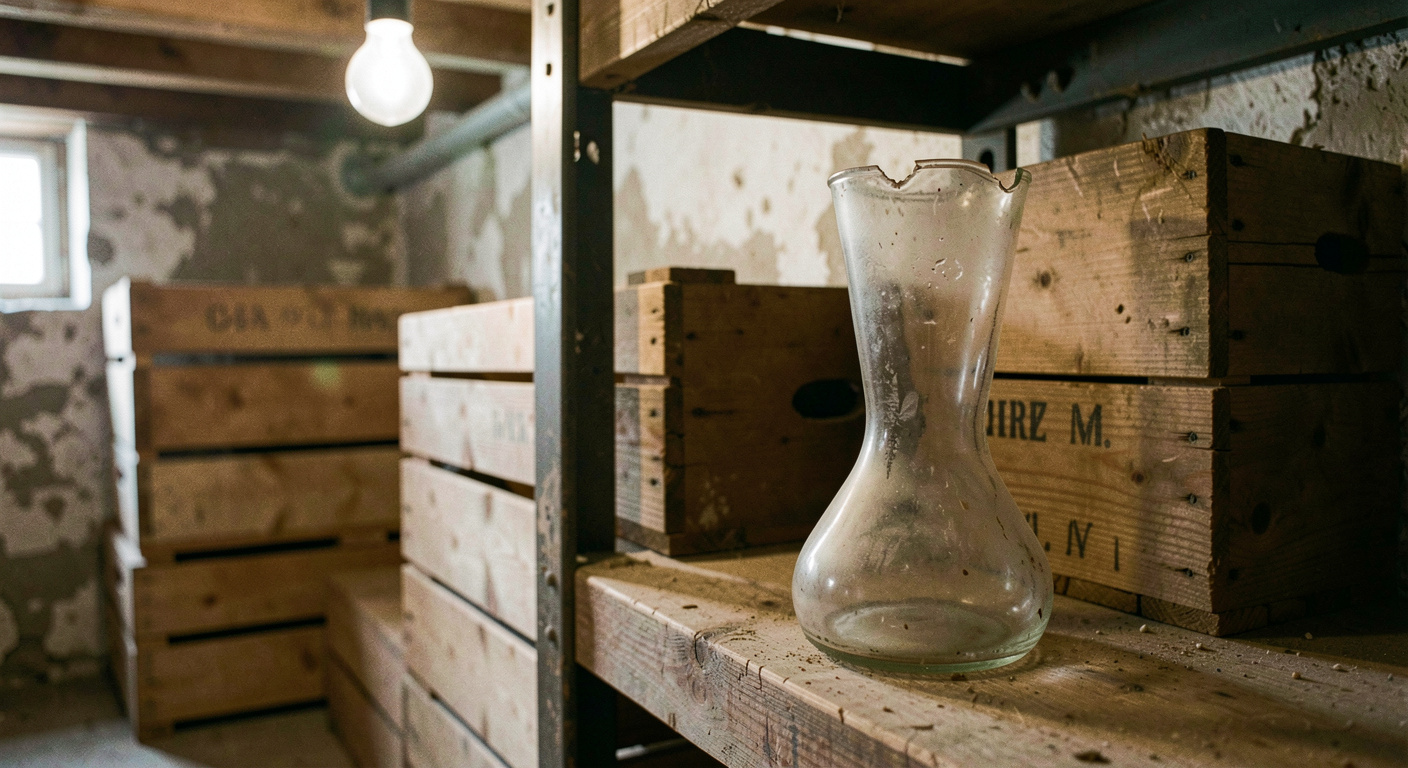
The object is a Bierstiefel, which simply means beer boot. Glass boots were being made and sold in German speaking Europe by the late nineteenth century, by which point pressed and blown glass novelties were a large and competitive trade. Fairgrounds, beer halls and souvenir shops all sold them.
That is the honest shape of the history: a novelty object from the era when glassware became cheap, carrying a story that explains and justifies it. The story is part of the object, which is why it has survived a hundred years of retelling.
The second life
Outside German speaking Europe the boot was, for most of the twentieth century, a curiosity. What changed that was the 2006 comedy Beerfest, which put a glass boot at the centre of its plot and gave English speaking audiences both the object and a set of rituals to go with it.
The effect on bar shelves was immediate and it is still visible. The two litre boot, which is the size the film used, became the default size sold in Britain, Ireland, North America and Australia, and a generation learned the toe rule from a film rather than from a beer hall.
The sizes
- 0.5 litres. A novelty, and awkward, because the toe is still a trap at a size where nobody expects one.
- 1 litre. The sensible sharing size for a table of four. Heavy but manageable in one pair of hands.
- 2 litres. The one everybody means. About three and a half British pints, and around two and a half kilograms once filled.
- 3 and 5 litres. Table centrepieces rather than drinking vessels, and genuinely difficult to lift with beer in them.
The customs that travel
Two of them turn up nearly everywhere, and both exist because of the air bubble in the toe rather than because of tradition.
The first: whoever causes the first bubble, and takes the splash that follows, buys or fills the next boot. The second: whoever finishes the boot is exempt from the round, because emptying it is a job rather than a prize. Both customs are a way of pricing the two moments in a shared boot that nobody wants.
A third, less universal, is that the boot is passed with the toe pointing at the next drinker, so they take delivery knowing exactly which way it is facing. All three, and the physics that produce them, are set out in how to drink from a beer boot without wearing it.
Why the shape survives
By every principle of glassware design the boot is a bad glass. It has no useful waist, so it does nothing for the bead. It traps no aroma, because the mouth is wide and there is nothing above the liquid to hold a smell. It puts the drinker's hands all over the beer, so it warms fast. Set it beside the shapes explained in pilsner, tulip, nonic: reading a glass by its waist and it fails on every count.
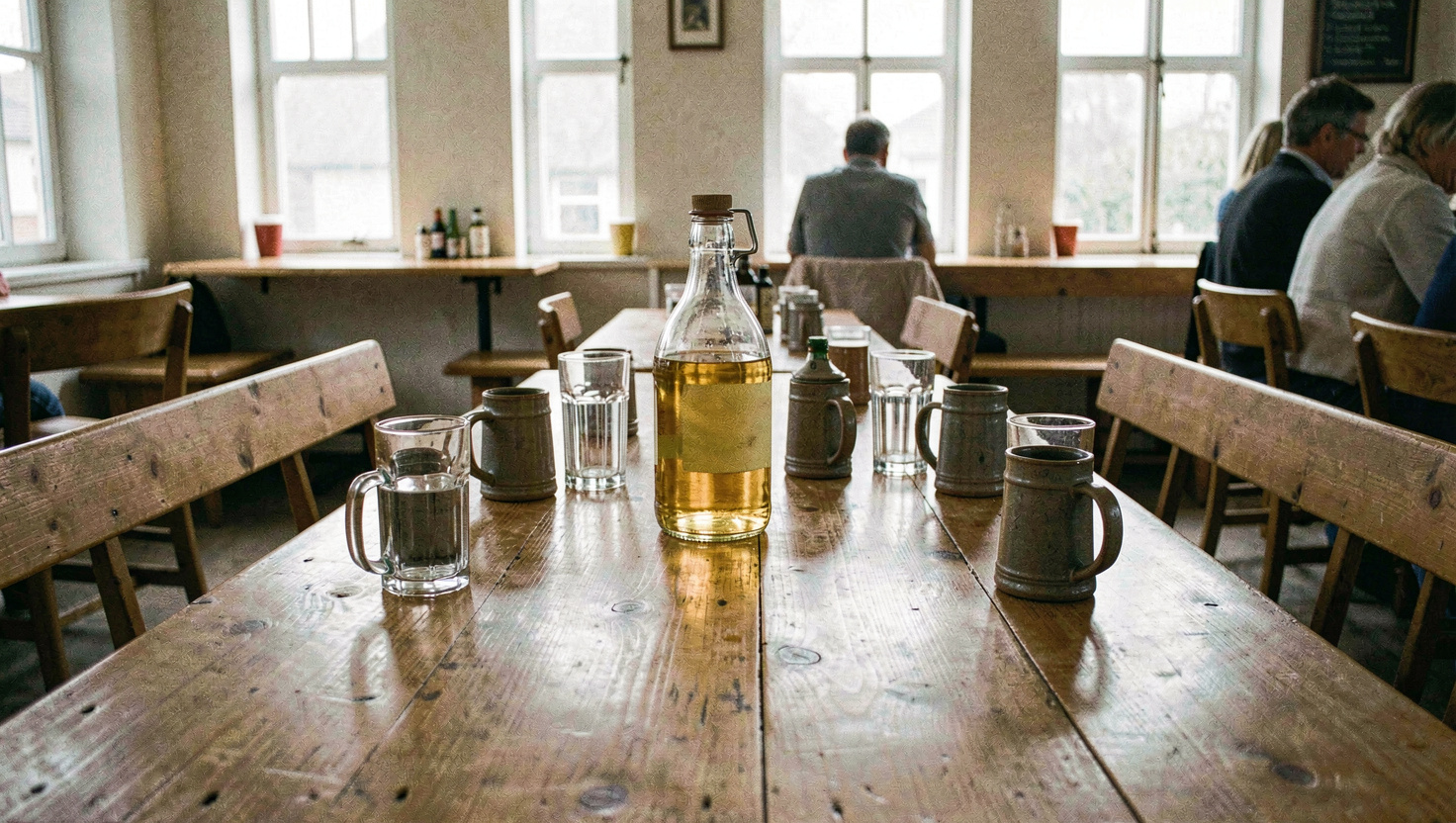
It survives because it is not really a glass. It is a shared object with a story and a hazard attached, which is a different category of thing, and the same category as a loving cup or a yard of ale. The beer is the medium; the passing is the point.
Living with one
A boot is the hardest vessel in the house to wash and the hardest to dry, because the toe is a right angled dead end that no straight brush reaches and no air circulates through. Stood upright on a shelf it holds a puddle indefinitely, and a boot that smells stale is a boot with water in its toe. The routine that fixes it, along with the reason not to put rinse aid anywhere near beer glassware, is in washing and storing glassware so the head survives.
And keep it off the table when cards are out. A two litre boot on its side empties in about four seconds, over everything, which is a lesson every table that has played Kings Cup with a boot on the table has learned exactly once.
The boot holds a beer that took a week to make, a journey walked through in what the pint went through.
The boot travels less well than the drinking habit itself, which reaches the other side of the world in a nightcap in Tsim Sha Tsui.
Objects with a barracks past share the shelf with objects from a workshop bench, like the painted tray under the bottles.
Filed under Beer culture. Published June 25, 2026.