Pilsner, tulip, nonic: reading a glass by its waist
Every beer glass on a shelf is an argument about aroma, temperature and handling. Once you know what the waist, the stem and the rim are each doing, you can pick up an unfamiliar glass and work out what it was built for.
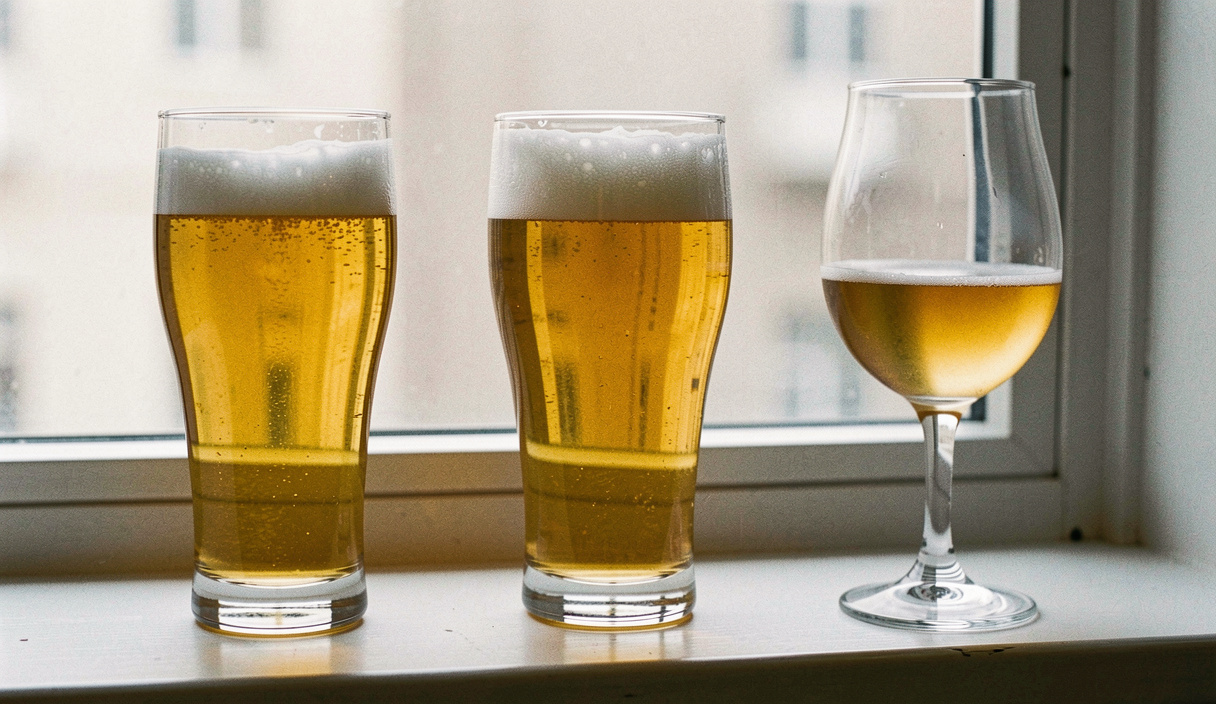
There is a rule that does most of the work, and it is worth having before the examples. The narrower a glass is at the waist compared with its mouth, the more of its design is spent on aroma. The straighter and more parallel its walls, the more of its design is spent on serving: pouring fast, stacking, washing and not breaking. The same ground is covered in a glass chosen for the pour.
Everything below is that rule applied to the six shapes you are most likely to own. The same ground is covered in the glass a red is poured into.
The pilsner: a cone that shows the beer off
A pilsner glass is a tall, straight sided cone, usually 0.3 litres, narrow at the foot and wider at the rim. It is the display case of the glass world. The height stretches the column of beer so the colour reads, the taper means the bead of bubbles is visible from base to surface, and the relatively small surface at the top keeps the head tall and tight rather than letting it spread thin.
It is a poor aroma glass, which does not matter, because the beers usually served in it are clean rather than aromatic. It also warms fast, because there is no stem and no handle and the walls are thin, which is why the serving size is small.
The nonic: the working pint
The British nonic pint is a straight glass with a bulge about five centimetres below the rim. Its capacity is 568 ml, either to a line near the top or to the brim depending on which version you own.
The bulge has two jobs, and the name gives away the second one. It stops stacked glasses jamming into one another, which happens constantly with plain straight glasses and ends with two glasses fused and one of them broken. And it protects the rim: a glass knocked against a table lands on the bulge rather than on the lip, so it takes no nick. That is where the word comes from.
It also gives your hand something to hold. A pint glass is a heavy object at the start of the evening and the bulge is exactly where the fingers of most people naturally close.
The tulip: a stem, a bulb and a lip
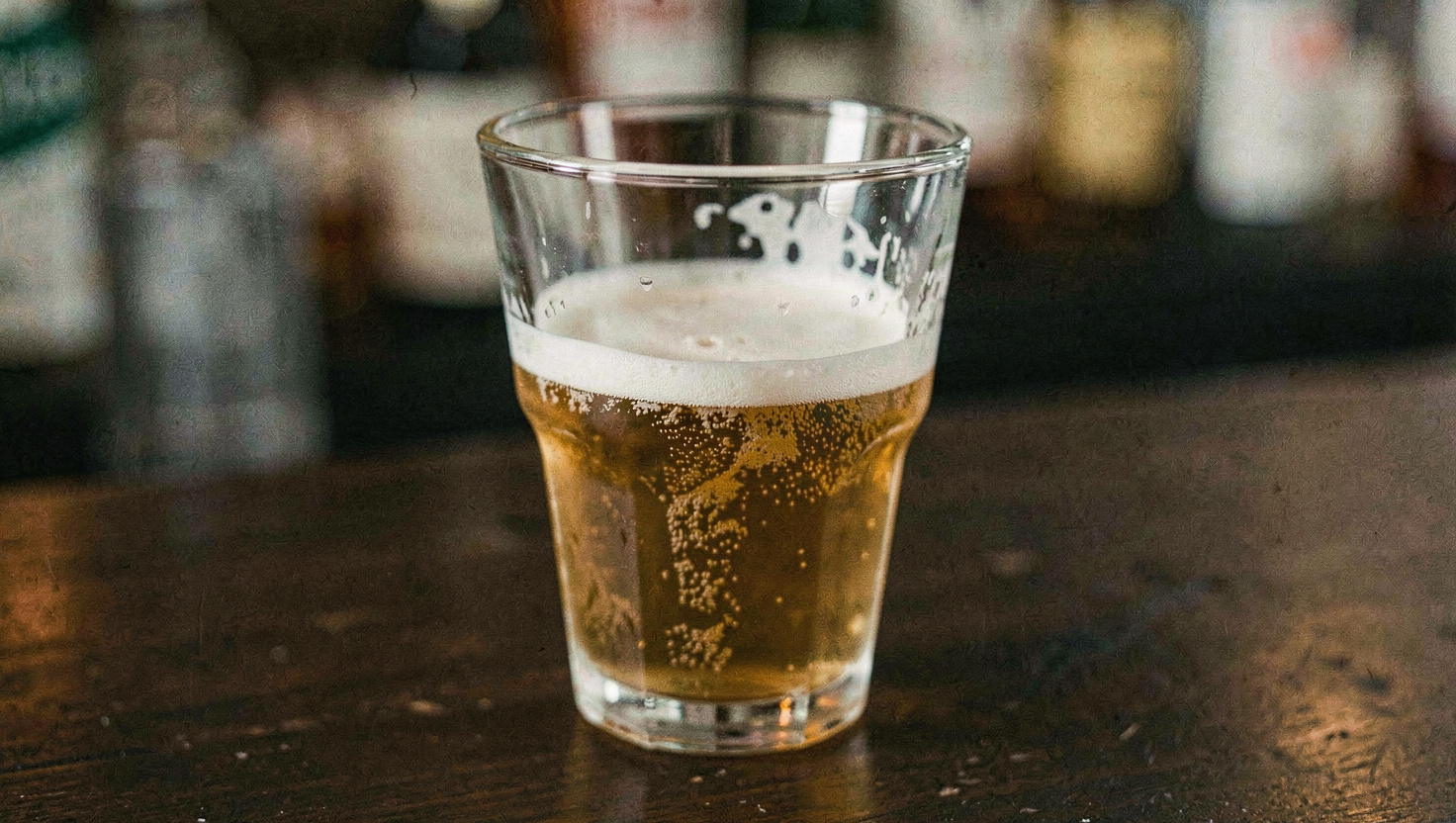
A tulip is three ideas stacked. The bulb gathers volatile aroma above the beer. The flared lip supports the head and directs it, and it delivers the beer to the front of the tongue rather than the back. The stem keeps your hand away from the liquid altogether.
That last part matters more than people credit. A strong beer served at cellar temperature in a stemless glass climbs two or three degrees in the time it takes to drink it, and a Belgian strong ale at fifteen degrees is a different drink from the same beer at eleven. The stem is a thermal break, and it is the reason wine glasses have had one for centuries.

Three more worth knowing
- The dimpled mug. Thick walls, a handle, and a grid of dimples. The handle keeps the hand off, the thick glass slows warming, and the dimples add mechanical strength. It is the most durable beer glass there is, which is why it survived a century of pub service, and it is the right glass for anyone who drinks slowly.
- The stange. A narrow cylinder of about 0.2 litres, used for kölsch. Small because the beer is meant to be drunk fresh and replaced often, narrow because a small surface keeps carbonation in over the short life of the serve.
- The snifter. A short stem and a wide bowl that narrows sharply at the top. Built for warming a strong drink in the hand and concentrating what comes off it. Used for barrel aged and high alcohol beers in small measures.
The waist rule, applied
Pick up an unfamiliar glass and compare the narrowest point of the body with the diameter of the rim. Mouth much wider than the waist: it is a serving glass, built to pour into and drink from quickly. Waist wider than the mouth: it is an aroma glass, and the beer that belongs in it is one you are meant to smell before you drink.
Where thickness comes into it
Thin walled glasses feel better at the lip and warm faster. Thick walled glasses feel clumsier and hold temperature. Neither is a quality signal on its own, and a heavy base does not mean a well made glass; it means a stable one, which is a genuine virtue on a table where people are reaching across each other.
That stability is a real consideration if the glass is going to sit in the middle of a game. A tall, thin, stemmed glass at a table playing Kings Cup is a glass on its side within the hour, and the recommendation there is a wide heavy tumbler for exactly this reason.
What all six have in common
Every shape here is defeated by the same thing: a film of fat on the inside wall. It flattens the head, kills the lacing, and makes an expensive tulip perform worse than a clean jam jar. The wall angle only matters once the wall is clean, which is the argument in washing and storing glassware so the head survives, and the physics of what the foam is doing is in head retention.
And if you want to see the waist rule pushed to its limit, look at the two most extreme shapes on any bar shelf: the weizen glass, taken apart in why a weizen glass is shaped like that, and the glass boot, which breaks the rule entirely and has to be drunk from in a particular way as a result.
A shelf read properly by its shapes also deserves a proper photograph, which is its own small discipline: photographing the bar you built.
Filed under Glassware. Published June 11, 2026.