Photographing the bar you built
The bar took a winter to build and the photo takes ten minutes. It still comes out flat, dark or crooked unless you borrow the working habits of the people who photograph rooms for a living.
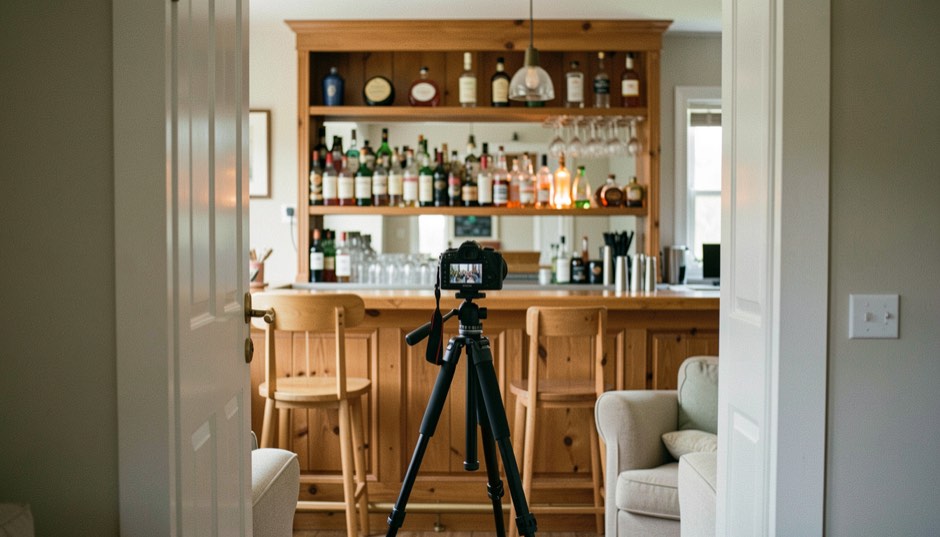
A bar is a small room with a lot of straight lines, which makes it the same problem the property photographers solve every day: keep the verticals vertical, expose for the window, and let the warm light inside be warm. The difference is that nobody is paying you, so the standards can be higher.
Surloff's guide to architecture photography covers the working method from brief to archive: the shot list, the camera height that keeps walls honest, the correction of converging verticals, and the mixed light problem of windows that blow out while the corners go black. It is written for commissions and it reads perfectly well as a checklist for your own shelves.
Why does the room keep going crooked?
Because the camera is tilted. Point it up to fit the shelf in and the walls lean; the fix is a level camera and a lower or higher position, not a wider lens. Chest height, straight on, is the default that works. If the frame still will not hold the room, step back into the doorway and let the door frame crop the edges for you.
What light do you shoot it in?
Daylight through the window with the bar's own lighting on: the strip behind the shelf, the lamp over the counter. The mix of cool window and warm tungsten is what makes a bar photo read as a bar rather than a showroom. ArchDaily runs interiors photographed exactly this way, and the pattern repeats: the lamp stays on, the daylight does the exposure.
What do you move before the first frame?
One thing, and it is always the same thing: the everyday clutter that stopped being visible months ago. The charging cable, the mail, the watering can. The photo sees them fresh. Then a wipe of the counter, the good bottles forward, the glasses lined like the glassware shelf taught them, and the room is ready. The warm shelf light that does the flattering was planned in back bar lighting without the glare.
When do you take the second set?
At night, once, with the lamps on and people in it. The daylight set documents the room; the night set documents what the room is for. The two together are the bar, and they are the pair the next project gets measured against. For the version with a crowd in the frame, photographing the party without killing it is the companion method.
Where do the photographs live afterwards?
In two places. The tidy set goes in the project folder, dated, because every future change to the room will be measured against it. The best single frame earns a print, small, hung where the bar can see it: the room photographed is also the room reminding itself what it is for. A painted sign gives that frame a subject with words in it, and the sign that names the bar is worth making before the camera comes out.
And one copy goes to the people who helped build it. The friend who held the level and the one who carried the countertop deserve the record of the thing they made, which is what the camera was really for all along.
Does a phone camera do the job?
For the record shot, yes, with discipline. The phone's problem is the same tilt as any camera, plus a habit of brightening the dark corners until the room looks lit by a shop. Shoot in the app's manual or pro mode if it has one, lock the exposure on the window light, and let the shelves fall where they fall. The grain at ISO 1600 is honest; the smeared noise-reduction version is not.
What the phone cannot do is the long exposure at night with the lamps on, which wants a tripod and a real shutter. For that one frame, the borrowed camera or the patient compact earns its hour, because the night shot of the lit shelf is the photograph the room will be remembered by.
The bar will keep changing, and the photographs are how the changes get remembered. Each new bottle, each repaired shelf edge, each rearrangement of the stock earns its frame eventually. A room that gets photographed regularly is a room being paid attention to, which, in the end, is all a home bar ever asks of the person who built it.
Filed under Bar essentials. Published September 1, 2026.