Painting the sign over the bar
A board over a home bar is usually the last thing finished and the first thing a guest reads. It needs one even wash for the ground and one dark line for the words, and both of those are watercolor habits rather than lettering skills.
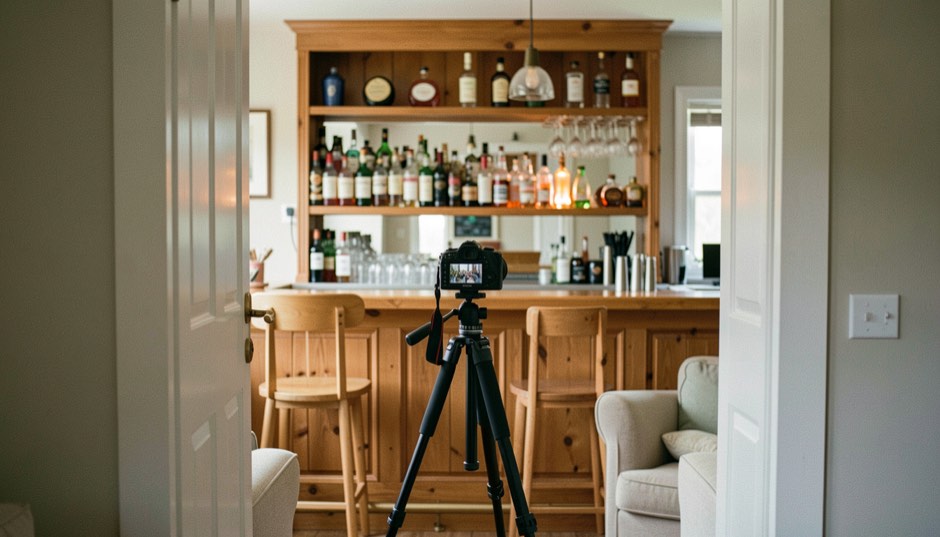
A sign over a bar needs two things from the painter: one even wash for the ground and one dark line for the words. Both fail in ways you can see coming. Uneven colour comes from an uneven brush load, a streak comes from going back into an area that is already starting to dry, and mud comes from laying a second colour over a first one that has not dried yet. None of those are mysteries of talent. They are the same three faults a wash shows on paper, and the cure is the same as well.
Pigment and Paper, an independent watercolor magazine, sets the wash out in the order that avoids most of it. Its guide to how to lay a watercolor wash takes the flat wash, the graded wash and the wet-on-wet sky one at a time, and it is specific about the things that actually decide the result: the ratio of water to pigment, the tilt of the board, how much the brush is loaded, and the moment the surface stops taking paint. The same section goes on to glazing and layering for depth, and to the fault finding that follows when a wash has already gone wrong, which is what makes it useful to somebody painting a board rather than a picture.
It helps to keep the definition in view while the wash goes down. As the Tate's glossary of art terms explains, watercolour is fine pigment held in a water-soluble binder, and because the paint is semi-transparent the white of the paper supplies the light rather than the paint.
How do I lay a flat or graded watercolor wash without streaks?
Mix more paint than you think you need, because running out halfway across the board is what produces the classic dry patch. Tilt the board slightly and work from the top down in single passes, side to side, keeping a wet edge at the bottom of each band so the next stroke merges into it. Load the brush fully before each band and never go back over a band that has started to dull. Then leave it alone to dry flat, which is the hardest instruction here and the one that saves the sign.
A graded wash follows the same sequence with one change: start with the pigment at full strength and add water to the brush as you move down, so the band lightens across the board. That is the version most bar signs want, because the words will sit on the lighter part and the eye will go there first.
What the board wants before the letters go on
Preparation is where the sign is won. Sand and prime the board so the water sits on the surface instead of sinking in, tape the border if you want a clean edge, and test the wash on an offcut of the same material before it touches the sign. Rule the line of lettering in pencil, lightly, and leave the pencil there rather than erasing it, because an eraser lifts the sizing as well as the mark. Keep the palette to one or two colours. A sign is read at a distance and in poor light, and a third colour usually costs legibility without adding anything a guest will notice.
Why does a wash turn muddy, and how do you fix a hard edge?
Mud comes from overworking, in practice: three or more colours run together while they are still wet, or the same area brushed one time too many, which lifts pigment and mixes it with what is already settling. The fix is to stop, let the board dry completely, and build the colour back with a translucent layer on top, which is what the glazing method is for. A hard edge is a different fault. It is the visible boundary where a wash dried before the next passage reached it, and it can be softened with a clean damp brush while both areas are still damp. Once it has dried, the honest options are to leave it as a deliberate line or to work it into the design, because scrubbing a dried edge on a primed board takes the ground with it.
Where the sign hangs, and what it needs around it
Hang it where the room can read it without anybody stepping back: above the shelf, below the strip light, at the height the eye lands when somebody is standing at the counter. The lighting that works for bottles usually works for a painted surface too, and the placement rules in back bar lighting without the glare apply to a sign as much as to a shelf. Once it is up, photograph it in daylight rather than under the strip, in the way described in photographing the bar you built, because a sign is the part of the bar that will end up in every picture taken of it.
The same brushwork turns up on other objects on the shelf, and a sign is not the only thing worth painting for a room that fills in October: the sign painted for one night of the year is the same job with a shorter life. If the ground and the line are done properly, the board will outlast the occasion many times over, which is the argument for doing it once and doing it on good material.
Filed under Bar essentials. Published September 15, 2026.