Kings Cup: the rules, card by card
One deck, one glass in the middle, and a ring of cards that nobody is allowed to break. Here is the base game, the meaning of every card, and the house variations set out on their own so the table can choose before the first card turns.
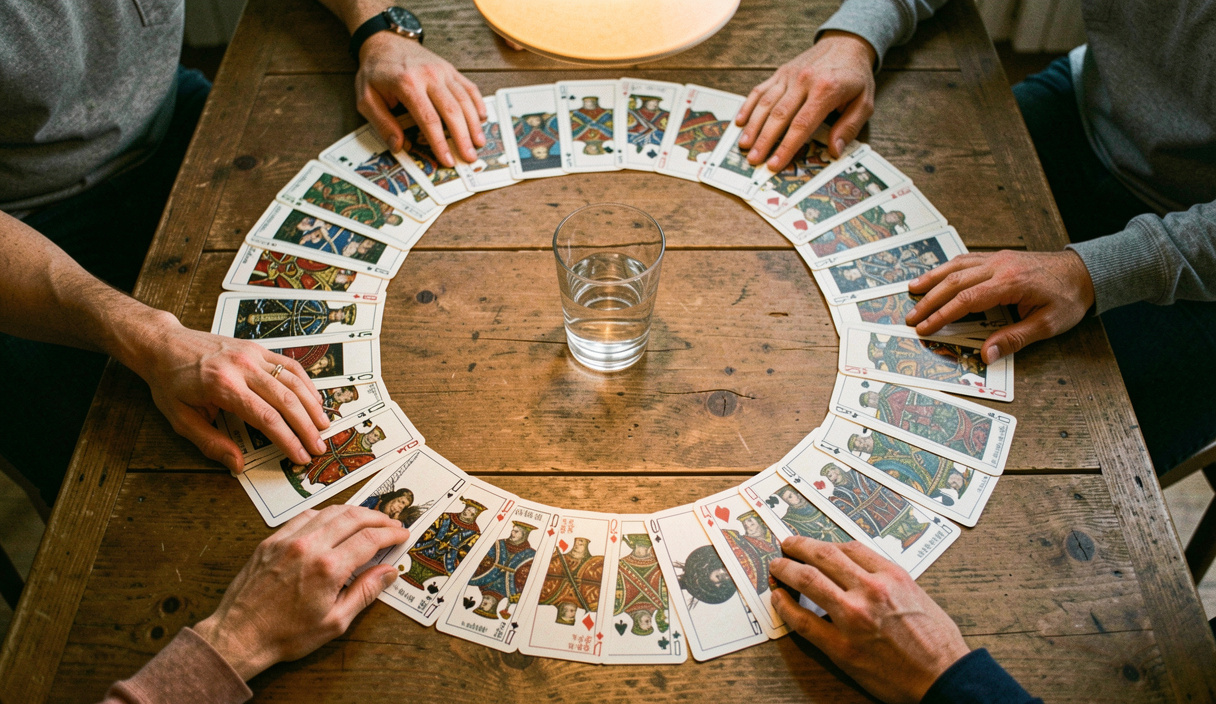
Kings Cup is the card game most home bars fall back on, because it needs a deck, a glass and nothing else. It scales from four players to a dozen, it is explained in ninety seconds, and it gives a table the two things it wants: a reason to talk to everybody, and a running joke for the rest of the night.
It also produces arguments, always in the same three places. The version below is the one that travels. Add your own layer on top out loud, before anyone draws.
What you need
- A standard deck of fifty two cards. Jokers are removed.
- One large glass in the middle. A pint works; a wide heavy tumbler works better, being harder to knock over.
- A drink each. The game is written for adults of legal drinking age, and runs perfectly well on water or a soft drink for anyone who wants it that way.
- A table everybody can reach, or the ring gets broken by accident every second turn.
The setup
- Put the empty glass in the centre of the table.
- Spread the whole deck face down in a ring around it, cards touching, so the ring is unbroken.
- Decide the direction of play and stick to it. Clockwise is the default.
- The first player draws any card from the ring, turns it face up, and does what the card says.
- Play passes to the next player. The ring is drawn from until the last king comes out.
The deck, card by card
Ace, Waterfall. Everybody starts drinking at the same time, beginning with the player who drew. You may only stop once the player to your right has stopped. The drawer therefore controls the length of the whole thing, which is the point of the card.
Two, You. The drawer points at one player. That player drinks.
Three, Me. The drawer drinks.
Four, Floor. Everybody touches the floor. The last hand down drinks.
Five and Six, the split. These two cards split the table into two groups, and the named group drinks. Draw the line however you like, but pick it once at the start and keep it for the whole game.
Seven, Heaven. Everybody raises a hand. The last hand up drinks, which is usually whoever was still reading the card.
Eight, Mate. The drawer picks a mate, who from now on drinks whenever the drawer drinks. Mates stack, so a player can end up owing three people.
Nine, Rhyme. The drawer says a word. Play goes round, each player rhyming with it. The first to repeat or stall drinks.
Ten, Categories. The drawer names a category, glassware or football clubs or things in a fridge. Round the table until somebody dries up.
Jack, Rule. The drawer invents a rule that holds for the rest of the game. No first names, no pointing, an accent for ten minutes. Anyone who breaks it drinks, and the rules pile up.
Queen, Questions. The drawer becomes question master. Anybody who answers one of their questions drinks, until another queen is drawn.
King, the Cup. The drawer pours a measure of their own drink into the central glass. The first three kings just fill it. The fourth king ends the game.
The cup in the middle
The central glass is the part people get wrong. It is not a punishment bowl. Whoever draws the fourth king drinks what is in it, so the first three kings pour a measure, not a half pint. Agree on that measure at the start: two fingers, a mouthful, or a fixed count.
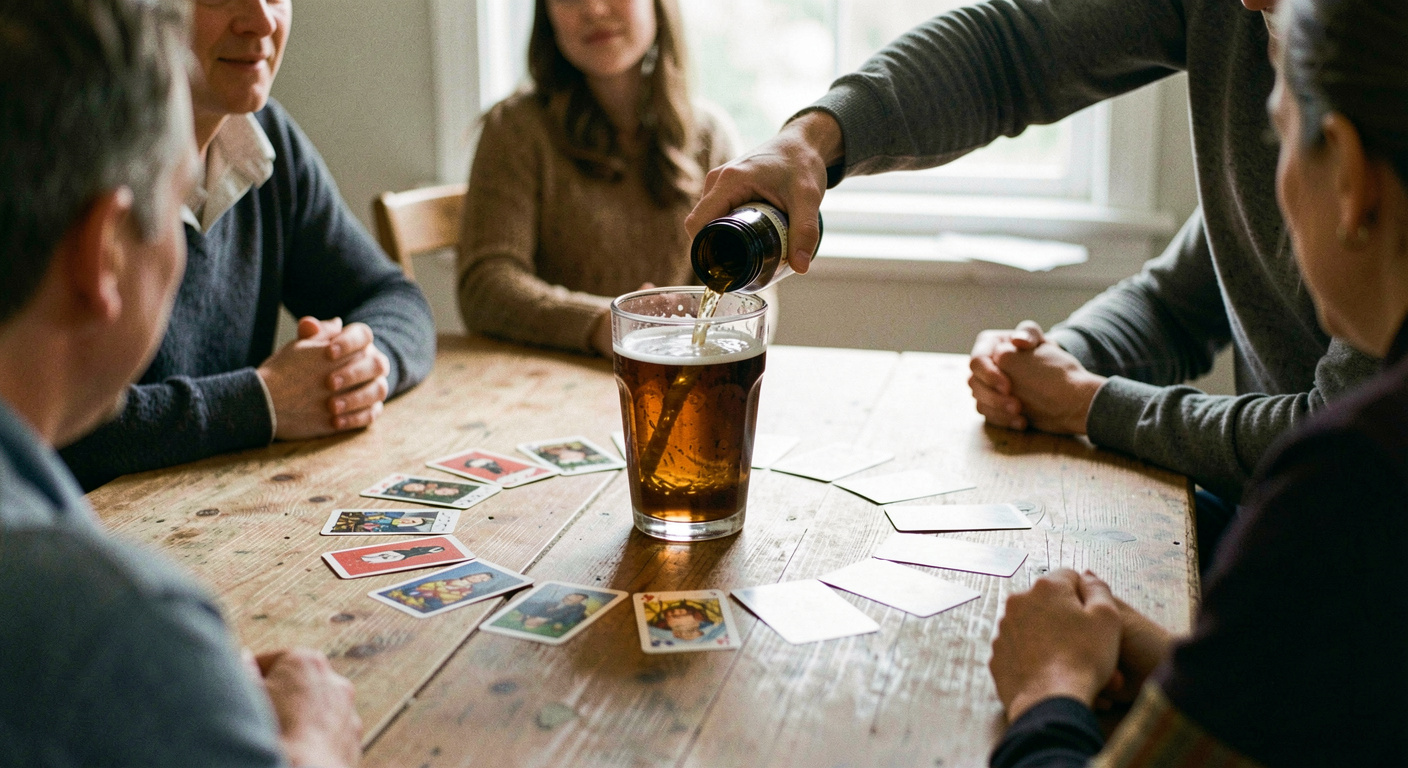
Two habits keep it civil. Everyone pours from their own glass, so nobody inherits a mixture they never chose. And the drinker of the fourth king may top the glass up with water, without comment.
House variations, kept separate
These are common enough that you will meet them, but none of them belongs to the base game. Announce the ones you want before the first draw.
- Break the ring, drink. A player who moves a card so far that the ring is no longer continuous drinks. Strict tables use it, and it does make people careful.
- Thumb master. A second running role, usually attached to the jack. The thumb master can put a thumb on the table at any moment; the last player to notice and copy drinks.
- Nominate on the fourth king. The drawer shares the cup rather than drinking it alone. Common at larger tables, where three pours make a full glass.
How the game ends
The fourth king ends it, whether that comes after eight cards or after forty. There is no scoring and no winner. For a second game, gather every card, shuffle properly and lay a fresh ring: carrying rules over from a finished game is how a good night turns into a legal seminar.
Where the arguments start
Three places, every time. The waterfall, because someone was watching the wrong neighbour. The queen, because a question master who is enjoying themselves starts counting rhetorical questions. And the invented rules, because the fourth jack always contradicts the second one.
All three are settled the same way: the drawer of the card rules on it, immediately, and the table moves on. If your evening keeps stalling on rulings, the fix is a simpler game rather than a better constitution, and Circle of Death is the closest cousin with a tighter rule set.
One last practical note. Kings Cup lives or dies on everybody reaching the middle of the table. If you are hosting more people than the table was built for, the seating in a twelve person night on a six person table matters more than any rule here, and a heavy tumbler from the glassware shelf survives an evening better than a tall one.
The night that produces a broken ring of cards also produces the photograph nobody planned, handled in photographing the party without killing it.
For the table that wants its rules written down in advance, the pub quiz answer sheet, typed properly.
Filed under Drinking games. Published August 11, 2026.