Circle of Death: a deck, a can, and ten rules
One deck laid in an unbroken circle, one can in the middle, and a game that can end at any moment because somebody reached too far. Here is the base version, card by card, with the break rule that gives it its name.
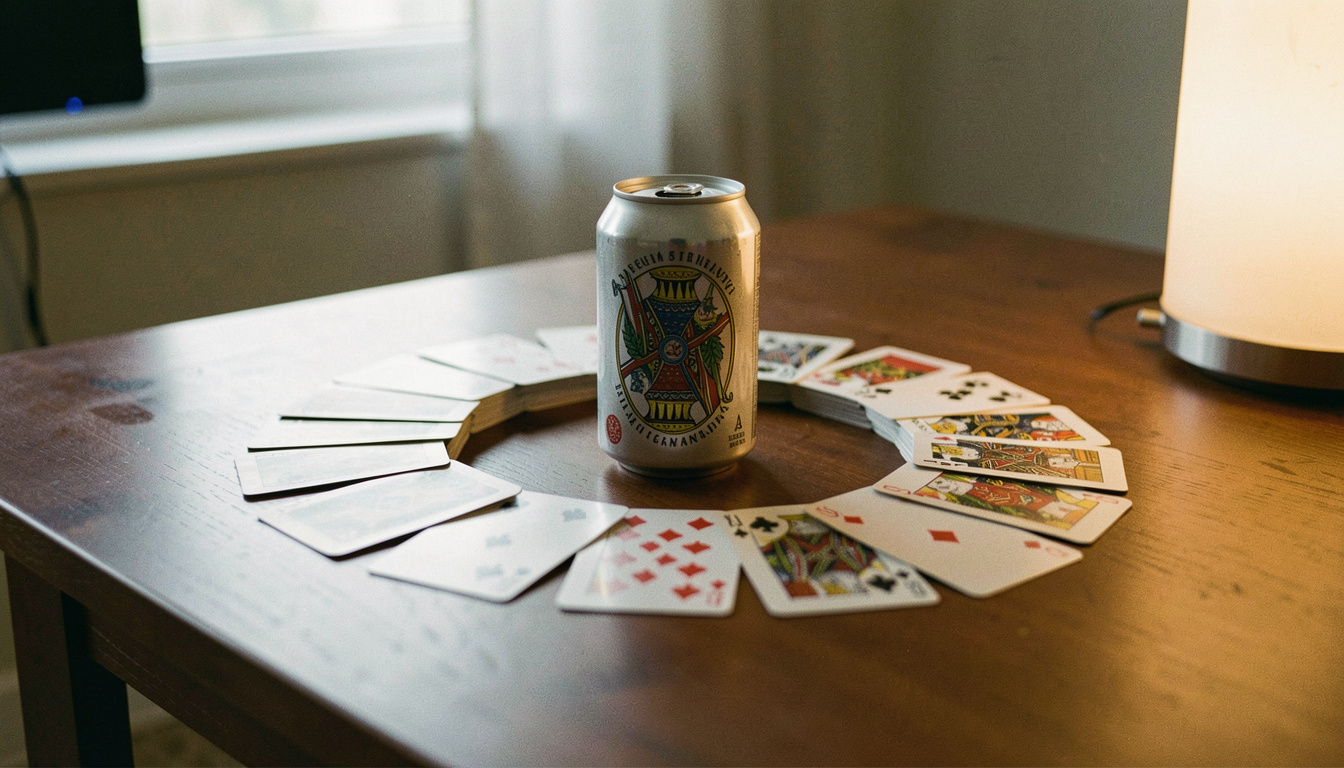
Circle of Death and Kings Cup are cousins, and at a lot of tables they are the same game under two names. The version below is the one worth knowing as Circle of Death specifically, because it has a feature Kings Cup does not: the circle itself is live, and breaking it matters.
What you need
- A standard deck of fifty two cards, jokers out.
- One unopened can in the centre. A can rather than a glass, because it is narrow, it is stable, and nothing can be poured into it.
- A drink each. As with every rule sheet here, the game is written for adults of legal drinking age and works exactly as well on water or a soft drink.
- A surface everybody can reach across without standing up. This is not a suggestion; the whole tension of the game depends on it.
The setup
- Stand the can in the middle of the table.
- Spread the whole deck face down in a single ring around it, every card touching its two neighbours, no gaps.
- Agree the direction of play. Clockwise unless somebody argues.
- The first player takes any card from the ring, turns it face up, and does what it says. The card goes in a discard pile away from the circle.
The ten rules, card by card
Ace, waterfall. Everybody drinks at once, starting with the drawer. You may stop only after the player before you in the direction of play has stopped. The drawer sets the length for everybody.
Two, you. The drawer nominates one player, who drinks.
Three, me. The drawer drinks.
Four, floor. Everybody puts a hand flat on the floor. Last hand down drinks.
Five, thumb master. The drawer becomes thumb master and stays thumb master until another five is drawn. At any moment they may place a thumb on the edge of the table; the last player to notice and do the same drinks.
Six, the split. The card divides the table into two named groups and one group drinks. Draw the line once at the start of the game and keep it there for the whole game.
Seven, heaven. Everybody puts a hand in the air. Last hand up drinks, and it is nearly always whoever was still reading the card.
Eight, mate. The drawer picks a mate. From now on the mate drinks whenever the drawer drinks. Mates stack, so by the end of a long game one player can owe three people.
Nine, rhyme. The drawer says a word. Play goes round the table, each player rhyming. First to repeat, stall or produce something the table rejects drinks.
Ten, categories. The drawer names a category. Round the table until somebody dries up. Good categories are narrow enough to run out: brands of crisps, not animals.
Jack, make a rule. A rule that holds for the rest of the game. No first names, no pointing, drinks held in the left hand. Rules stack and everybody who breaks one drinks.
Queen, question master. The drawer becomes question master until another queen appears. Anyone who answers a direct question from them drinks.
King, pour. Here is the difference from Kings Cup. In Circle of Death the king does not fill a central cup, because the middle of the table holds a sealed can. Each of the first three kings means the drawer drinks; the fourth king ends the game, and whoever draws it opens and finishes the can.
The break, which is the whole point
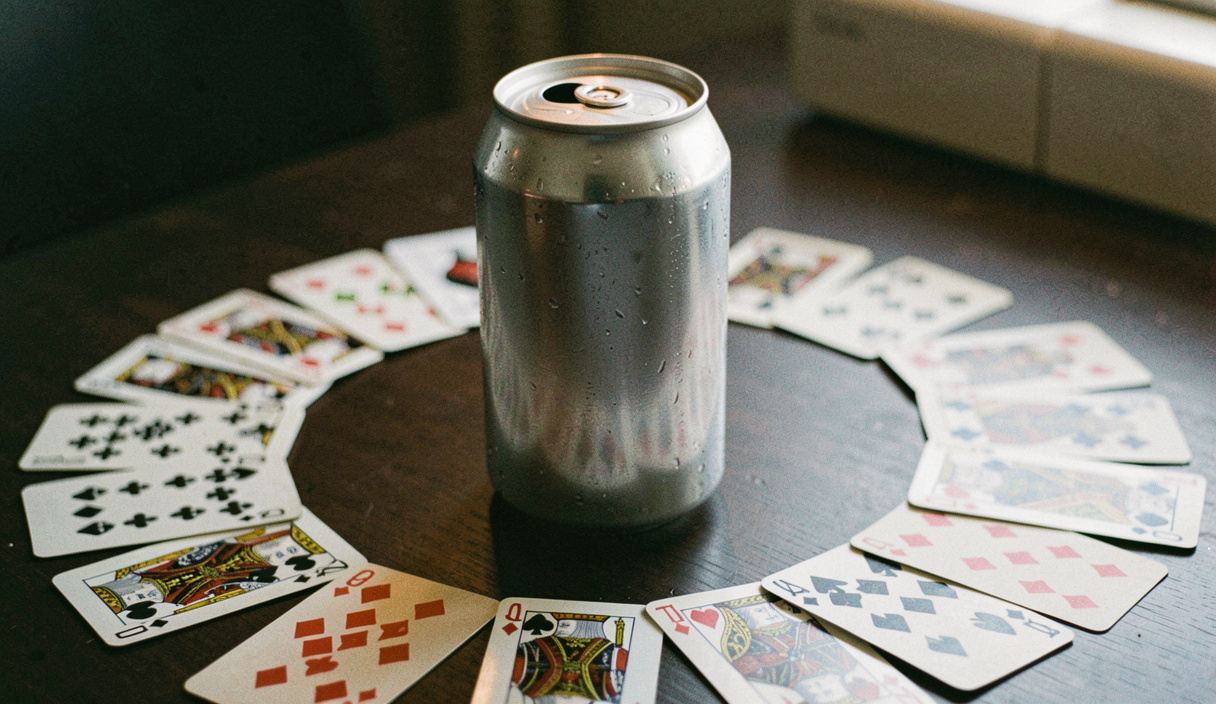
The circle must stay continuous. Every card must touch its neighbours. As the ring thins out, that becomes harder, and by the last dozen cards it is genuinely delicate.
A player who breaks the circle, meaning they move or remove a card so that two remaining neighbours no longer touch, drinks. That is the mild version, and most tables play it.
The strict version, and the one the game is named for, is harsher: the moment the circle is broken, the game ends there. The player who broke it opens the can and finishes it, no matter how many cards are left. Under that rule the last ten draws happen with two fingers and a lot of held breath, and any player who has taken a rule from a jack will find someone trying to make them laugh mid draw.
Repairing the ring
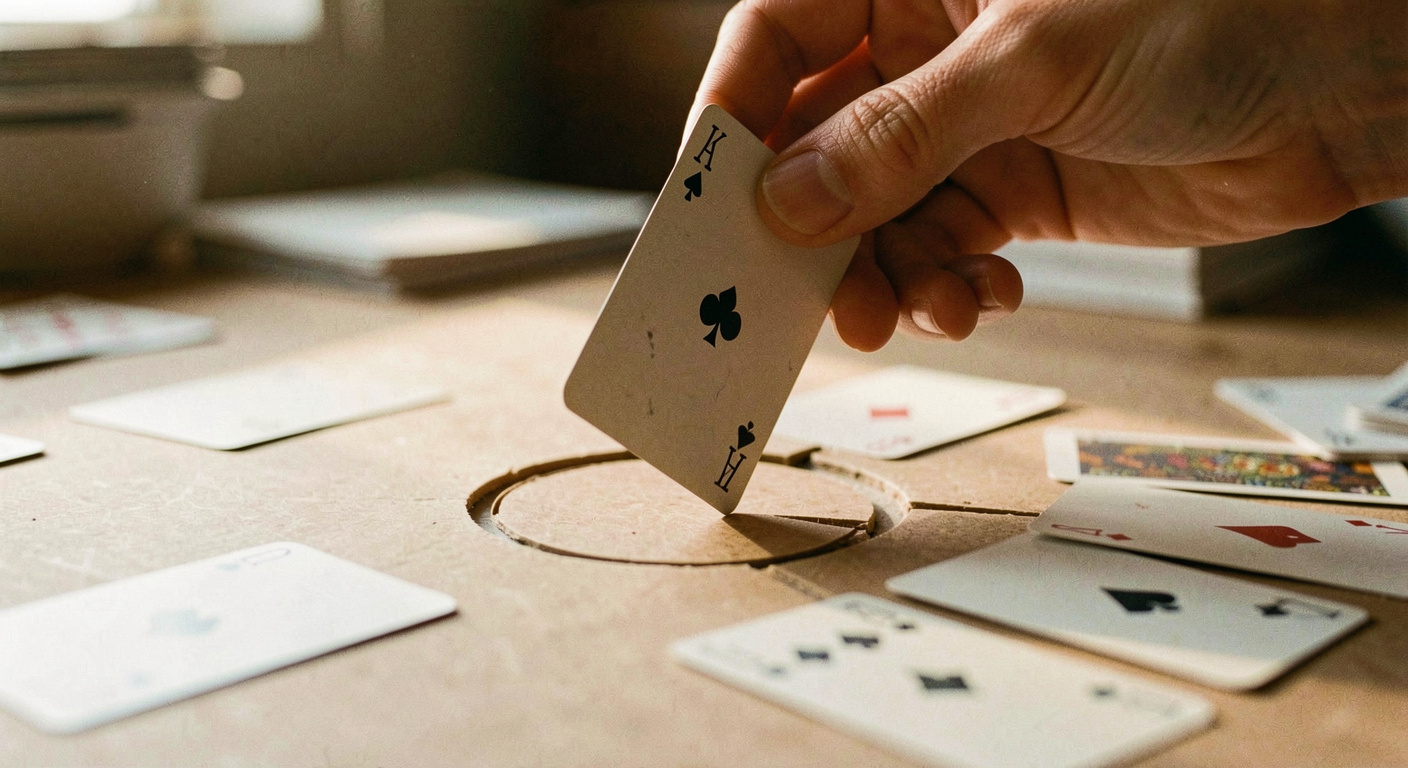
Some tables allow repair. If a card is nudged, the drawer may slide neighbouring cards together to close the gap before the next player draws, and no drink is owed. This makes the game longer and considerably less tense, so decide before the first draw which version you are playing, and get it out loud so nobody claims later that they thought otherwise.
Where tables disagree
- Does the ace mean waterfall or ace of spades? Some tables use aces as a straight drink and put the waterfall on the king. The version above is more common and gives the game a better shape.
- Does the thumb master survive a new five? Base version: the role transfers. Some tables let both roles run at once, which is chaotic and quite funny at a big table.
- Can a rule from a jack contradict an earlier rule? The clean answer is that the newer rule wins and the older one dies. Otherwise you spend the last quarter of the evening adjudicating.
How it compares with Kings Cup
Kings Cup is a longer, slower game with a shared central glass that fills over the course of the night, and the ending is entirely determined by the fourth king. Circle of Death has no shared glass, so nobody inherits a mixture, and it has a second possible ending that can arrive at any time. Side by side, Kings Cup is the better game for a settled table and Circle of Death is the better game for a table that is only going to sit still for twenty minutes. The full card by card comparison is in Kings Cup: the rules, card by card.
If you want something even shorter to open the evening with, before people have settled and while latecomers are still arriving, the game to reach for is High or Low, which needs no ring at all and can absorb a new player between cards.
The practical bit
A full deck laid in a ring around a can needs about 50 cm of clear table, and every single player has to be able to reach the middle without standing. That is a real constraint at a crowded table, and if you are playing with more than eight people it is worth reading the seating and zone advice in a twelve person night on a six person table before you deal, because a game where two people cannot reach is a game those two people are not in.
Filed under Drinking games. Published April 30, 2026.