The pub quiz answer sheet, typed properly
The home pub quiz is a good game wearing bad materials: somebody's handwriting, a sheet that runs out of rows, a marking row at the end. The fix is a typed answer sheet, and the fix for the typing is about ten minutes a day.
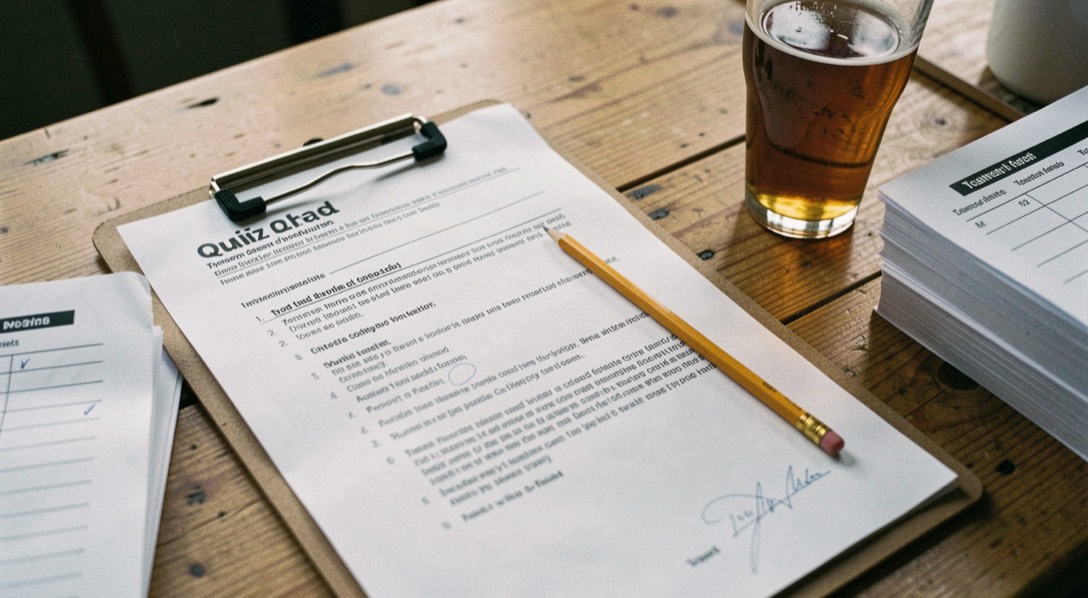
A quiz is only as fair as its paperwork. Handwritten answer sheets smudge, run out of space and turn the marking round into a palaeography exercise. The typed sheet fixes all three: numbered rows, a column for the wager or the joker round, team name at the top, and a score line at the bottom the marker cannot miss.
Typing it fast enough that the questions can still change at the last minute is the hidden skill. Typing Tutorial structures exactly that: ten-minute typing practice sessions built on accuracy before speed, the home-row discipline, and the daily drill that makes a forty-row sheet a five-minute job. The free exercises at typing.com run in the browser if the habit needs a starting point.
What goes on the sheet itself?
Forty rows, not fifty, because a home quiz that runs past an hour and a half is a meeting. A column for the round name so the table knows where it is. A box for the final score in a place the marker reaches without hunting. And a footer line for the table's written-down protest, because every quiz has one and it is better on paper than out loud.
How do you write questions a table can answer?
In rounds of ten with a shape: an easy first round to settle the room, a picture or music round in the middle, a hard round near the end. One question per round that everybody at the table could plausibly know, so nobody spends a whole round writing nothing. The test of a good quiz question is that the answer is satisfying even when you did not know it.
How does the marking stay honest?
By swapping sheets between teams and reading the answers slowly, once. The marker's rule: if it is not on the sheet, it did not happen, which is why the sheet matters. A disputed answer gets a mark in the margin and a ruling after the round, not a conference in the middle of it.
The quiz sits naturally beside the table's other competitive furniture: the bracket of a card tournament for the kitchen table for the nights that want a winner, and the crowded-table logic of board games that survive a crowded table for the ones that do not.
What the sheet becomes afterwards
An archive. The stack of used answer sheets is the running record of what the table knew in a given month, and the team names alone are worth keeping. Type the next one on the back of the last; the paper remembers.
What about the question master?
The quizmaster works from the same typed discipline: the questions sheet with the answers bolded underneath, printed or held on a tablet, never improvised from memory. A quiz read from notes taken in a hurry is a quiz that argues about wording all night. Type it, print it, and the room trusts the reading.
And the quizmaster drinks last or not at all, which is the one house rule nobody ever contests, because a slurred question is a spoiled round.
Where does the quiz fit in the evening?
In the middle, after the eating and before the night gets loose. A quiz run at eight o'clock has the table's full attention; the same quiz run at ten is shouting. Forty questions at two minutes each, plus the marking, is an hour and a half, which leaves the late evening for the games that need less paperwork and the conversations that need none.
The other slot that works is the whole evening itself: the quiz as the night's centrepiece, the reason everyone came, with the cards and the dice left in the drawer. A table that came for the quiz is a table that will argue happily about the answers until closing, which is the sound the sheet was designed to produce.
The last row on the sheet is the date, because the sheet outlives the night. Years of answer sheets, kept in a folder, become the record of the table's shared knowledge and its shared blind spots, the running tally of which subjects the group owns and which it keeps getting wrong. The typed sheet is paperwork in service of that, which is to say, in service of the argument continuing properly next month.
Filed under Bar games. Published September 8, 2026.