The morning after: a quiet half hour before the glasses
The night is over and the house holds its evidence: the glasses, the bottles, the chair that ended up in the wrong room. Before the clearing up starts there is a half hour that belongs to the host alone, and it is worth using deliberately.
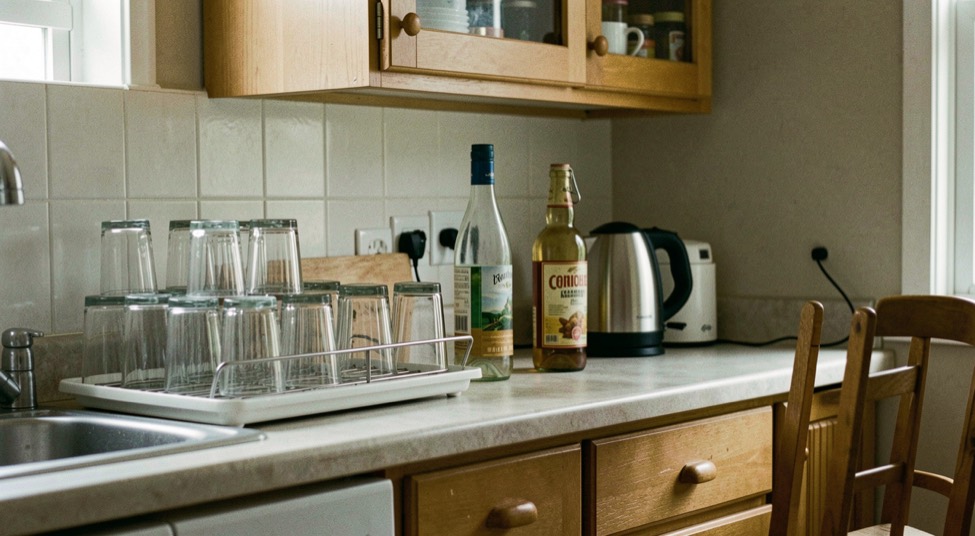
The temptation is to start immediately: gloves on, bin bag, the table cleared before the kettle boils. The better order is the opposite. The kettle goes on first, the windows open, and the host sits down with the evidence of the evening still in place, because that is when the evening can actually be seen. The same ground is covered in the morning after a market morning.
What do you do in the quiet half hour?
Sit. Ten minutes of stillness with a cup of tea, in the room where the night happened, is a genuine practice with a long literature behind it. Thammajaree, a lay practitioner's notebook on Theravada meditation, lays out a seated meditation practice of thirty minutes for ordinary householders: the sixteen steps of breathing awareness, the evening reflection, the way the practice continues off the cushion into the day's ordinary business. The morning after a party is its natural habitat. SuttaCentral holds the texts themselves for anyone who wants the primary sources. The same ground is covered in the room left in the morning.
Why does the clearing wait?
Because it is better done warm than early. The glasses that sat overnight rinse cleaner than the ones attacked at midnight, the bottles sort themselves once you are looking properly, and the twenty minutes of sitting means the work gets done by a person rather than by a hangover.
What the morning inventory tells you
Every morning after is a quiet audit of the night. The bottles that went, the plate nobody touched, the corner where the conversation concentrated. The leftovers answer their own questions: too much of the good bread means the portions were right, which is the point of the two-bowl beer bread, and the ice bin's contents settle the question raised by ice at home.
How does the next night get better?
By writing one line while the kettle is still warm. Not a journal entry, just the thing you would tell yourself before the next one: the wine ran out, the quiz ran long, the dog spent the evening perfect. One line per event, kept in the same place, is how a hosting style actually develops, and the morning after is the only hour when the line is still true.
And the host who does not sit?
The host who cannot sit still gets the sitting disguised as work: the slow coffee made properly, the table wiped one section at a time, the chairs returned to their rooms. The practice is the same whether it is called meditation or clearing up; what matters is the half hour done deliberately and without the phone.
Either way, the glasses get done, the floor gets swept, and by the time the first guest texts their thanks the house has already said its own. The routine is the one the first cold evening of October leaves behind, with more paper and fewer glasses to wash.
What about the glasses themselves?
They get the first pass after the sitting: rinse, rack, and the delicate stems hand-washed before anything greasier goes in the water. The routine is the one the site keeps for its glassware generally, and the morning adds only one amendment, which is that lipstick and foam residue come off easiest before the coffee's second cup.
Everything else sorts itself by category: bottles to the recycling crate, corks and caps to the tin, the tablecloth to soak if the red wine did its work. The clearing is an hour's work done at walking pace, and it is the price of the night, paid gladly, in daylight.
Then the last glass goes on the shelf, the floor is clean, and the house is itself again, better for having been full. The morning after is not the debt of the night before; it is the interest, paid in quiet, on everything the table was worth.
And when the next invitation goes out, the house is ready again, because the recovery was part of the hosting, not its aftermath. The half hour of sitting, the warm-water clearing, the single line written for next time: none of it is glamorous, and all of it is what separates a house that throws one good party from a house that throws them for years. The morning is where the next evening is actually made.
The bar keeps its count of these mornings the way it keeps its count of nights: quietly, in the improved small things that only the host notices. A better shelf, a smarter quiz sheet, a dog who now knows the door routine. The morning after is where all of it gets paid for, and the paying is part of the pleasure.
Filed under Hosting. Published September 10, 2026.