Photographing the party without killing it
Every host wants the photograph of the night and nobody wants the evening interrupted to take it. Both are available: the trick is knowing which twenty minutes the camera gets, and spending them on the right frames.
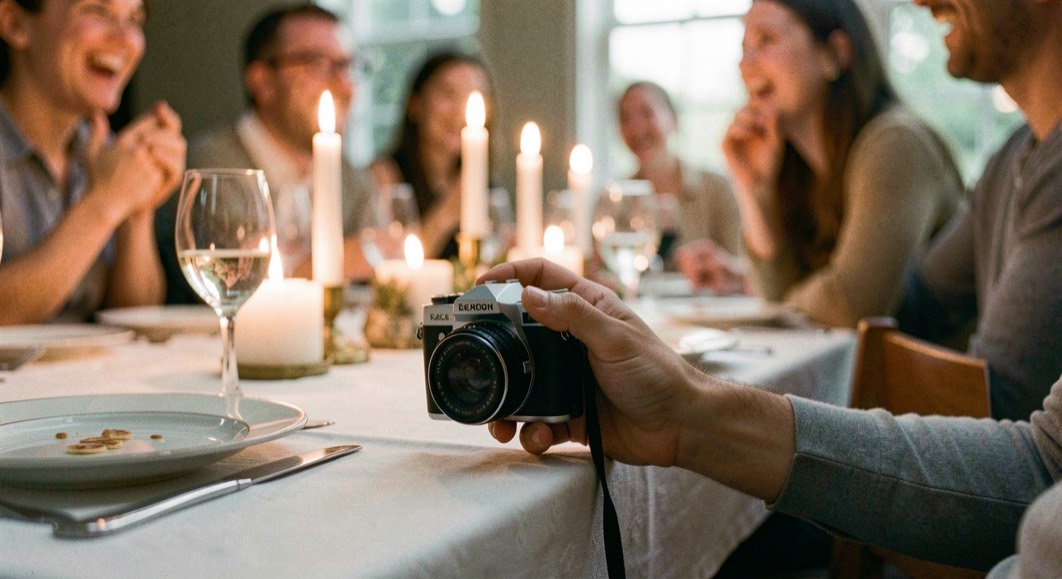
The amateur event photographer fails at the same point every time: they shoot all night. The working version of the job is three short passes and a camera that goes away between them. The first pass is the room before anyone arrives, when the table still looks like the effort it took. The second is early, during the first hour, when faces are fresh and glasses are full. The third is one frame at the table, mid-meal, which is the photograph everyone actually wants. The same ground is covered in the photograph taken in the dark of a set.
JTB Photography Journal is the working notebook for exactly this: event photography in low light, the single-source portrait, the discreet pass through a wedding, the discipline of a short kit list. Its method for covering an event without living inside the viewfinder translates directly to a hosted night.
What does the low light actually ask?
A wide aperture, a steady hand and acceptance. Candlelit rooms want the shutter slow and the ISO up, and they reward the photographer who leans on the doorframe. The grain in the final file is not noise; it is the room. The rules of thumb from PetaPixel's low-light guides apply: expose for the faces, let the corners go.
Which photos do not get taken?
The list is short and it is the whole skill. Nobody mid-bite. Nobody below the table. Nobody after the hour when the camera becomes a record of something the morning would rather not itemise. And the rule that protects the evening itself: the host never holds the camera during the good part, because a host taking photographs is a host who has left the party.
The tidy companion to all this is the room's own portrait, which is the quieter job described in photographing the bar you built. And the room that holds the evening in the first place is the one planned like a twelve person night on a six person table.
When does the camera come out for the last time?
When the table is at its best and the light is at its warmest, which is usually dessert. One pass, three frames, the camera back in the bag. The photograph that survives a good night is always the one that took a minute, not the roll that cost an hour of it.
What happens to the frames after?
They get a pass the next morning, not a gallery. Three or four worth keeping, shared once to the group, and the rest deleted without ceremony. The night's record is a small thing on purpose: a party that produces two hundred photographs was probably attended by the camera rather than the host.
Then the folder closes and the room goes back to being a room. The photograph that keeps working is the one somebody puts on a shelf, and shelves are for the good print, not the contact sheet.
What about asking permission?
At a home table the permission is the invitation: guests of a host who photographs know the house, and the standing rule is the simplest one, that faces are fine and anything after the point of dignity is not. New guests get the sentence at the door, camera visible, which removes the surprise and most of the objection.
The unphotographable are the easiest to handle: they are told the camera exists, their no is honoured absolutely, and the group shot gets taken at an angle that excludes them without exclusion being visible. A photo someone asked to be removed gets removed. The trust of the table is the only lens that matters.
And that is the whole method: three passes, the dignity rules, the camera away. The host stays the host, the guests stay guests, and the next morning there are a handful of frames that carry the night the way a good evening deserves to be carried: lightly, and by the people who were actually there.
The rest is atmosphere and luck, and luck favours the host who was actually at the party. That is the sentence to keep: the photograph serves the night, never the reverse, and a camera that understands its three passes produces a better record than one that never leaves the host's hand. The night is the subject. The camera is a guest with a very good memory.
Filed under Hosting. Published September 3, 2026.