Tadcaster: the brewing town that keeps its dead
Tadcaster, in North Yorkshire, is a town the British beer drinker knows from the labels: John Smith's and Samuel Smith's both brew there, on the same limestone water. It is also a town like every other in one respect: it built a memorial, and the names on it were the men who made the beer.
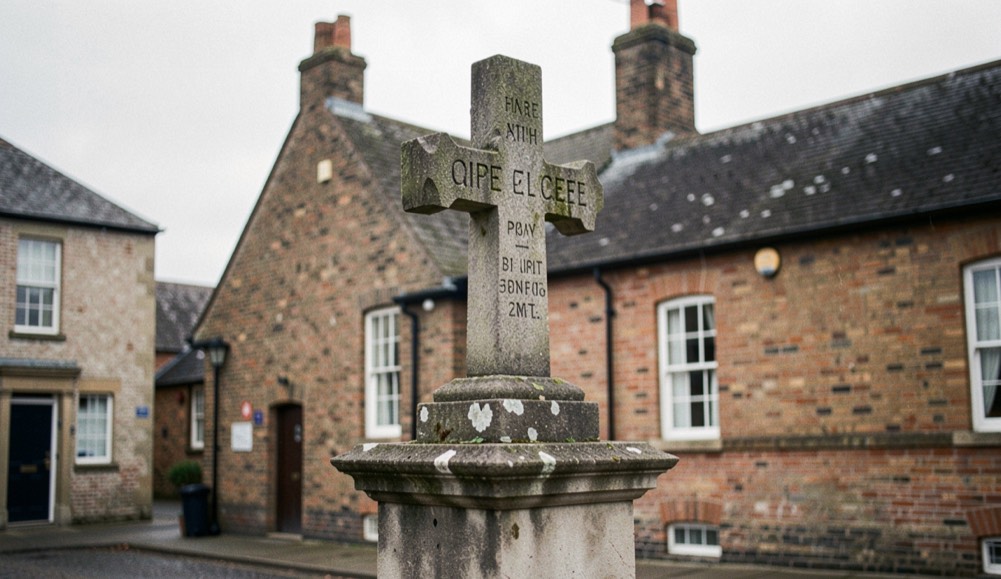
A brewing town is a small machine: the water, the malt, the cooperage, the dray horses, the pubs. When the First World War took the men, it took them out of that machine by name. The war memorials that went up afterwards list them in the order the town chose, and the choice, cross or obelisk, names by rank or by alphabet, is itself a record of how the place thought about itself.
Tadcaster War Memorials documents exactly this: Tadcaster's war memorials, the stones and their dedications, and the individual parcours behind the names, the service records, the letters home, the pensions and the returns to work. It is local history done at the resolution where it becomes legible: one name, one file, one absence at the maltings. The Commonwealth War Graves Commission holds the wider register the local stones rhyme with.
What does the brewing town add to the list?
An industry. The names on a brewing town's memorial are disproportionately the names of a workforce: the maltsters, the coopers, the draymen. Regiments raised as pals' battalions took whole workshops at once, which is why some towns have a memorial that reads like a brewery payroll for a single year.
Why walk between the memorial and the gates?
Because the distance is the point. The memorial in the square and the brewery gate are the same town seen at two depths. The stone records who went; the brewery, still running, records what stayed. A visitor who does both reads the place properly in an hour.
It is the same attention that objects on a shelf ask for. The beer boot's history is a barracks story before it is a party trick, and the head on the glass carries its own small archive, as head retention explains. Things keep records; towns do it more plainly.
What the memorial keeps that the label cannot
The label keeps the brand and the water. The memorial keeps the people. A town that makes beer for two centuries is really making continuity, and the stones in the square are where the breaks in it are written down. Reading them, then walking to the gates and watching the drays come out, is the closest thing the beer tourist has to a complete tour.
Who keeps the reading going?
The same people who keep the stones clean: the local historians, the relatives, the small museums and the visitors who stop. A memorial does its work only while it is read, and the brewing town's version is read twice over, once for the names and once for the trades attached to them.
The traveller who learns to read one town's stones can read any town's. That is the real souvenir of Tadcaster: not the pint, which is excellent and forgettable, but the habit of looking for who made it.
How do you visit it properly?
On foot, in a loop. The memorials stand in the town's open places, the breweries occupy the riverside, and the walk between them crosses the bridge the town has rebuilt after every flood. An hour covers the stones and the gates; a pint at a town pub covers the reading of what the water tastes like where it comes out of the ground.
Go on a weekday if the breweries are the point, because the drays and the lorries are the working part of the view. The town does not perform for visitors, which is the best thing about it: it works, and it remembers, and it lets you watch both.
So the brewing town keeps two ledgers: the one in the brewhouse, which is written in water and malt and updated daily, and the one in the square, which is written in stone and updated never. A visitor who reads both understands what a place that makes beer for a living actually is, and why the pint at the end of the walk tastes of more than the tap.
Every brewing town in Britain has this double book if you know to look for it. Burton has its stones, so do the hop towns and the malting ports. Tadcaster's are simply legible and close together, which makes it the place to learn the reading before you take the habit elsewhere. The beer is the excuse. The lesson is the walk.
The reading of the town pairs naturally with the reading of the product: the week between grain and glass that every Tadcaster pint carries is laid out in what the pint went through.
Filed under Beer culture. Published September 5, 2026.