Washing and storing glassware so the head survives
A glass can look spotless and still be coated in something that destroys a beer head within a minute. There are three quick tests that tell you the truth, and a handful of habits that keep a clean glass clean until it is used.
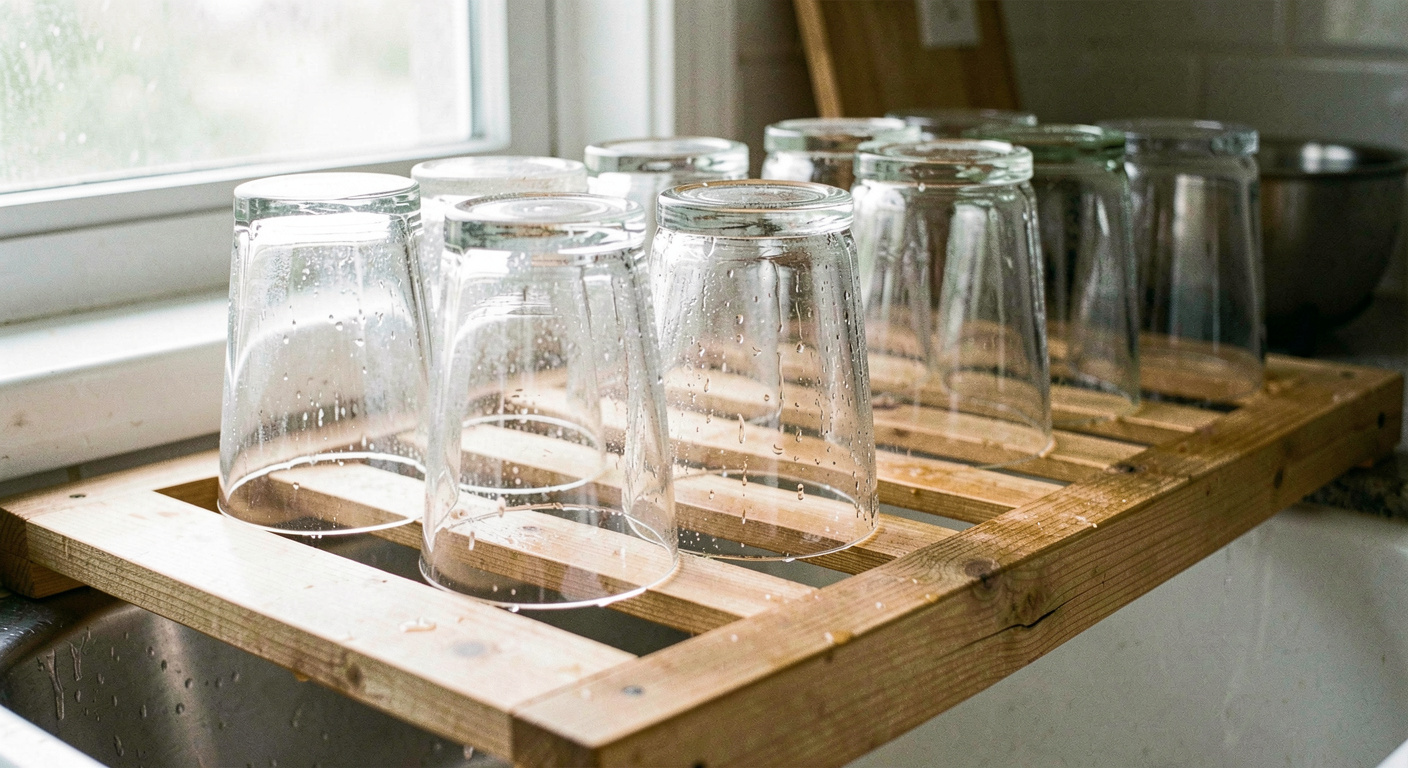
The trade has a term for this, a beer clean glass, and it means something more specific than clean. A beer clean glass is free of any film that interferes with foam: no fat, no protein residue, no detergent, and no rinse aid. A glass can pass every visual inspection you care to give it and still fail that test.
It matters because foam is fragile. The bubble walls in a beer head are held together by proteins and by hop acids, and both of those are displaced instantly by anything oily. One fingerprint of butter inside a pint glass will take the head off half a litre of beer in under a minute.
Where the fat comes from
- Lips and hands, which is unavoidable and is why glasses are washed.
- Food on the same washing up: a beer glass done in the water after a roasting tin is worse off than one that was never washed at all.
- Crisps, nuts and anything else eaten by hand near an open glass.
- Lip balm and lipstick, both of which are largely wax and oil.
- Rinse aid, which is a surfactant whose entire job is to spread a thin film so water does not bead. That film is exactly what you do not want.
- Any washing up liquid with a moisturising or hand softening claim, for the same reason.
The wash
- Wash beer glasses first, in clean hot water, before anything greasy goes in the bowl.
- Use a plain unscented detergent and a brush kept only for glasses. A cloth or a sponge that has met a frying pan carries fat into the glass.
- Get the brush into the waist and the base. A curved glass has a band halfway up that a straight brush skips, and that band is where residue survives.
- Rinse in hot water until the water runs clear, then give a final rinse in cold. The cold rinse leaves the glass a little below room temperature and stops it drying with spots.
- Do not dry the inside with a tea towel. A towel puts lint in and takes nothing useful out.
Three tests that tell you the truth
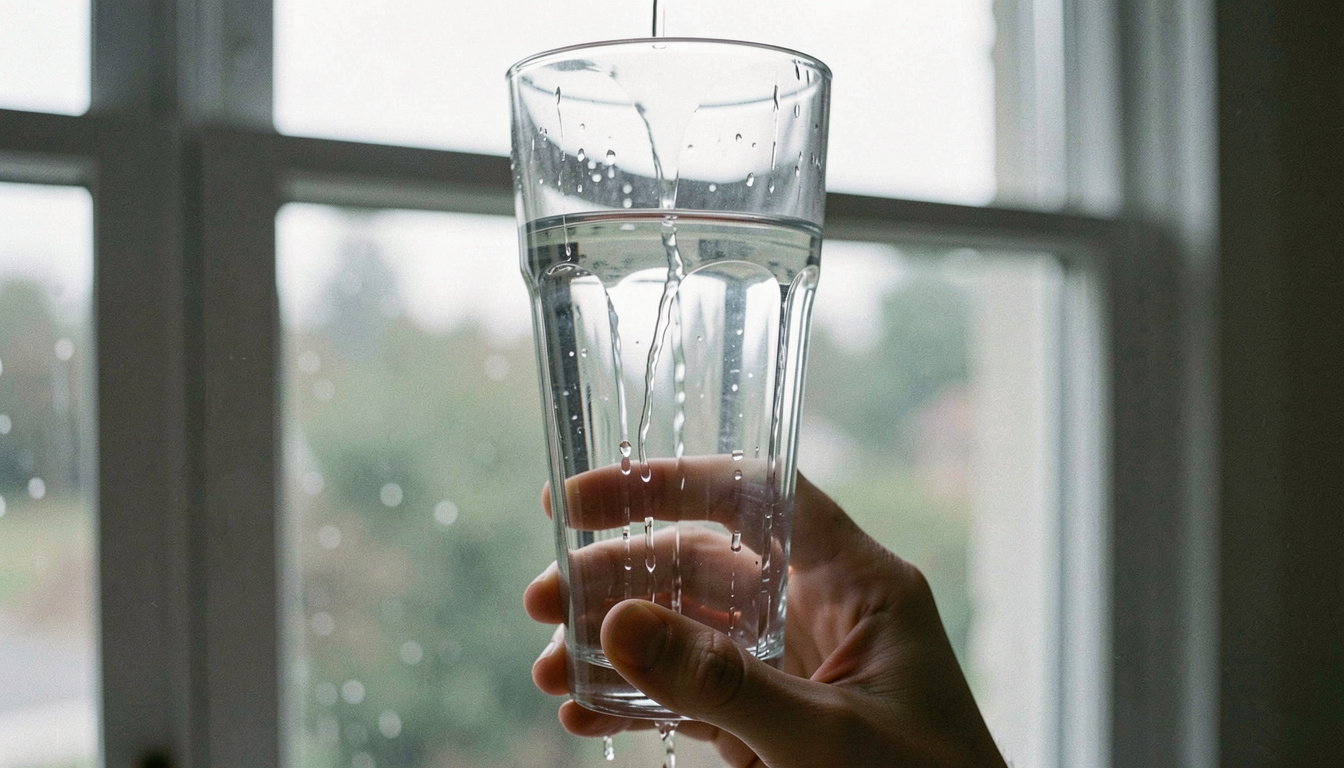
The sheeting test. Wet the inside of the glass and hold it up. Water on a clean glass forms an even, continuous sheet that drains smoothly. Water on a filmed glass breaks into droplets and dry patches. This one takes two seconds and catches most failures.
The salt test. Sprinkle a pinch of salt onto the wet inside wall. On a clean glass it sticks evenly all over. Where there is a film, it slides off or refuses to adhere, and you can see exactly which band of the glass is the problem.
The bubble test. Pour a beer and look at the inside wall below the surface. Small bubbles clinging in place along the glass, rather than rising, mean there is something for them to cling to. A genuinely clean glass has a clear wall and a bead rising from a few fixed points at the bottom.
The freezer is not your friend
Frosting beer glasses in a freezer is a habit borrowed from very cold lager service, and it causes two problems. A freezer is full of smells and glass takes them on readily, so a frosted glass often carries a faint note of whatever was in the drawer beside it. And the ice crystals that form on the inside give the carbon dioxide thousands of nucleation points at once, so the beer foams violently on the pour and then goes flat.
The better version is a cold water rinse immediately before pouring. It drops the glass temperature, it wets the wall so the beer runs rather than grabs, and it takes no planning.
Two habits worth breaking
Storing glasses rim down on a solid wooden shelf traps stale air in each one, and a glass that has stood mouth down on bare wood for a week smells of the shelf. Storing them upright in an open kitchen collects dust and cooking grease in the bowl. The compromise is upright on an enclosed shelf, or mouth down on slats or pegs where air moves.

Storage, spacing and stacking
Do not stack beer glasses inside one another. They jam, they scratch, and separating them is how rims chip. The one exception is a nonic, which was designed with a bulge precisely to survive stacking, and even then only two deep. That bulge and the rest of the shelf vocabulary is explained in pilsner, tulip, nonic: reading a glass by its waist.
Space glasses so nothing touches. Glass against glass in a cupboard is the single largest cause of losses in a home bar, and it always happens as you take one out. Stemmed glass is the exception to most of this: the bowl is what matters and the stem is a handle, which is why the wine glasses kept for guests get rinsed and stood rather than stacked.
The two glasses that need the most attention are the ones with awkward interiors. A weizen glass has a waist a normal brush skips, which is one of the practical costs of the shape described in why a weizen glass is shaped like that. A boot has a right angled toe that no straight brush enters at all, and it needs the bent neck brush and the drying position set out in how to drink from a beer boot without wearing it.
Why it is worth the trouble
Because the head is not decoration. It carries the aroma, it protects the beer underneath from oxidising in the glass, and its behaviour tells you whether the pour, the glass and the beer were all right. That readout, and the chemistry behind it, is in head retention: what the foam is telling you.
Wash the bar tools in the same clean water while you are at it. They are stainless, they take thirty seconds, and the reasoning behind keeping them out of a rinse aid cycle is in the six tools that actually earn their drawer space.
The routine here applies to every vessel on the shelf, with one exception that earns hand-washing forever: a handmade mug on the bar shelf.
Filed under Glassware. Published November 27, 2025.