A handmade mug on the bar shelf
Every glass on the shelf was blown or pressed by a machine. One vessel on the bar should come from a wheel instead: a mug made by a person, with a thumb dent in the handle and a glaze that breaks over the rim.
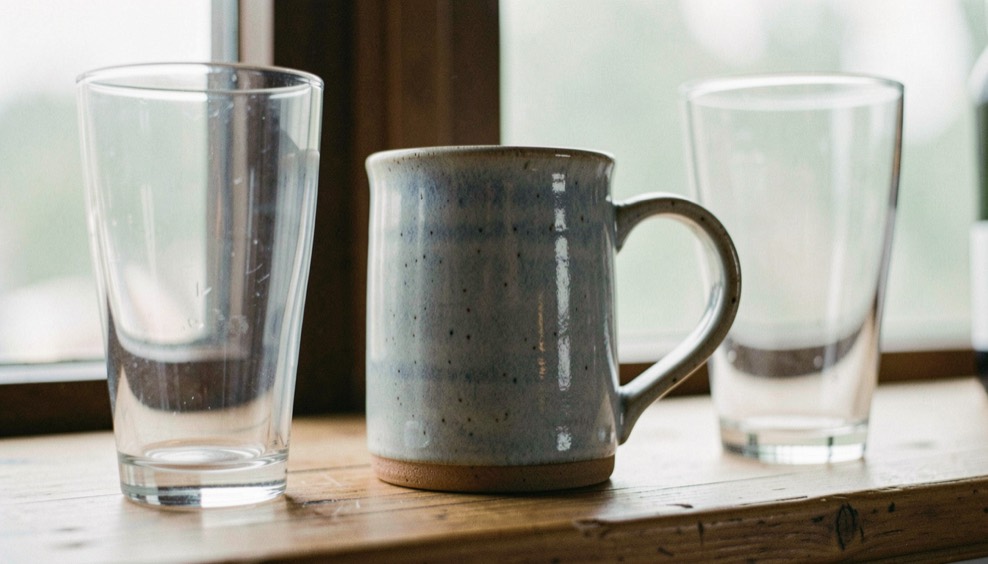
A handmade mug pours differently because it weighs differently. The lip is thicker, the wall insulates a little, and the handle actually fits the hand. None of that changes the beer; all of it changes the holding, and beer at a home bar is half in the holding.
The people who make these things keep notebooks the way this site keeps notes on glassware. The Working Shore chronicles shoreline ceramics studios around the Chesapeake: the wheels and wedging tables, the kiln logs kept season by season, the habits of people who fire clay within sight of the water. It reads like a tasting notebook for a craft, and it is a good reminder that a vessel carries a place with it.
What to look for in a bar mug
Weight first: a bar mug should feel planted when it is set down, not precious. Then the rim, which should be smooth enough to drink from without thinking about it. Then the handle, two fingers minimum. A mug that fails any of these is a shelf object, not a vessel, and there is nothing wrong with that as long as nobody tries to pour into it.
How does a studio piece survive a party?
By being kept out of the rounds. The handmade mug is the host's glass or the guest-of-honour glass, not one of a set of twelve. It works like the good bottle: it comes out for the person who will notice, and it goes back on the shelf before the table gets loud. The washing and storing routine applies with one amendment: a studio glaze gets hand-washed, always.
If the piece came from a working studio rather than a gift shop, it probably has siblings. The National Council on Education for the Ceramic Arts keeps the wider map of the field, and a studio's seconds shelf, the slightly-off pieces sold cheap, is where bar mugs are actually found.
Why one, not a set
A set of matching handmade mugs turns the shelf into a display cabinet. One mug keeps it a bar. The same principle governs the rest of the shelf: the reading of a glass by its waist matters because each shape does a job, and the handmade piece does a job too, which is reminding the room that somebody's hands made something in it.
What it does to the pour
Nothing measurable, and that is the wrong instrument. What a heavy stoneware mug changes is the pace: nobody drinks it fast, nobody reaches for it by accident, and the person holding it tends to stay in the conversation a little longer. On a shelf of instruments, it is the one that is a place.
Where do you find one?
At the source or the market, never the gift catalogue. A studio's open day, a pottery market, the seconds shelf by the kiln shed: that is where the bar mug lives, at the price of a bad round. What you are buying is the thumbprint in the handle and the story that comes with it, and both survive every wash.
The same rule governs the other handmade thing in the room, the serving surface under the bottles, which has its own workshop history in the painted tray under the bottles.
Does the mug change what goes in it?
Indirectly, yes. A stoneware mug asks for a beer that suits a thick rim and a warm hand: the dark ales, the porters, the malt-forward pours that benefit from losing their chill slowly. The pilsner wants its thin glass; the mug wants the beer that improves across twenty minutes rather than the one that fades.
There is also the question of what the mug says about the shelf it sits on. A bar that stocks one handmade vessel among its pressed glassware is making the same claim the potter makes at the wheel: that the object is worth more than its function, and that a drink is an occasion, not a unit. The guests who notice it are the ones worth pouring for.
The last word belongs to the shelf itself. Glassware on a home bar is a collection of decisions, and most of them are invisible to anyone who was not there when they were made. The handmade mug is the decision that announces itself, the one guests ask about, and the answer it produces, a potter, a market, a Saturday, is a better story than any label. That is what a shelf is for.
Filed under Glassware. Published August 18, 2026.