The cocktail shelf beside the beer fridge
A beer fridge is a complete answer until somebody asks for a mixed drink. The answer does not need to be a full back bar: four bottles, a measure and a way to read a recipe will carry an evening.
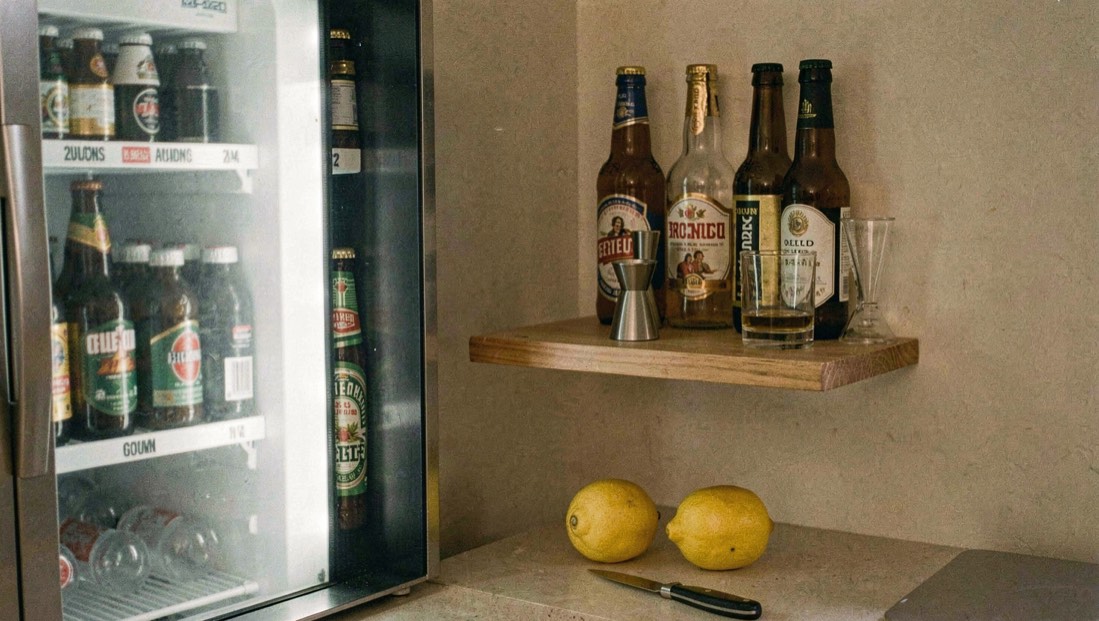
The guest who does not drink beer is not asking for a show. They are asking for a glass with something balanced in it. The shelf that answers that is small by design: a spirit you like, a vermouth, a bitter or an aperitif, and one bottle that is purely there for mixing. Everything beyond that is collecting, which is a different hobby. The same ground is covered in the shelf kept beside the fridge.
How do you read a cocktail formula?
A proper cocktail formula is a ratio with an opinion. Two to one, equal parts, built or shaken: the classic guides write these down plainly. The Evening Measure keeps its fiches that way, with cocktail formulas and their limits declared up front: the Martini and the Old Fashioned next to the Spritz and the vermouth drinks, each with the measure written out and the estimation marked where the recipe is a convention rather than a fact. Difford's Guide does the same job at reference-book scale when you need the longer list. The same ground is covered in the shelf beside the fridge.
Read the formula before the guest is waiting. The drink that takes ninety seconds to assemble reads as care; the same drink assembled while the recipe is being decoded reads as homework. A related note is kept in a shelf organised by what is opened first.
What the shelf actually needs
A jigger, because the measure is the whole game. A mixing glass or a clean pint glass and a long spoon, because stirring is most of the classics. Ice that was made this week. That is the kit, and it overlaps entirely with the tools that earn their drawer space already on the bar. A related note is kept in the shelf that holds small formats.
Two drinks cover the evening
Learn two and make them the same way every time: one stirred and strong, one long and light. A stirred drink covers the guest who wants something serious; a spritz or a highball covers the guest who wants to hold something while the beer drinkers do their flights. Two drinks memorised is better than twelve bookmarked, and it keeps the host at the table, where the night described in a twelve person night on a six person table actually happens. The next step from that point is the shelf a vase stands beside.
Where does the beer fit when cocktails are out?
Everywhere. The mixed drink on a beer night is a courtesy pour, not a competing programme. Keep it on the small shelf, keep the offer casual, and let the fridge stay the main event. The bar that can pour one decent stirred drink has a hospitality gear most cocktail bars never reach: it chose to.
What about the guest who wants neither?
The shelf answers that too. A bitter or an aperitif lengthened with soda is the grown-up soft drink, and it pours from the same four bottles. Nobody at the table should hold a glass that feels like an apology, and the alcohol-free guest who gets a proper built drink stops being a problem the evening has to solve.
That is the real reason for the small shelf: not to compete with the fridge, but to make sure every person at the table is holding something made for them. The one bottle that does not belong on the mixing shelf is the one being kept for a year or two, and the bottle that waits on the shelf is read differently from everything else here.
How do you stock it without a cabinet?
One shelf's depth, no more, and bought on the bottle-finished rule: nothing new comes in until something goes out. Vermouth is the bottle that argues for the fridge anyway, which settles its storage next to the white wine. Spirits keep at room temperature indefinitely; the enemy is the bottle that was opened three summers ago for a single pour and has been oxidising politely ever since.
The discipline that keeps it a shelf and not a collection is the same one that governs the beer side: every bottle earns its place by being poured. A liqueur bought for one recipe in 2019 and never touched again is not stock, it is decor, and the shelf only has room for things that work.
Done this way, the cocktail shelf stops being an expansion and becomes a form of courtesy, the small infrastructure of looking after whoever walks in. The beer fridge keeps its pride of place, the shelf handles the exceptions, and the host stays at the table instead of playing bartender. That division of labour, once it is set up, is what lets a home bar host anyone without strain.
Filed under Hosting. Published August 20, 2026.