Reading origin in a glass: riesling and solera vinegar
Origin in a glass is read in three places: the grape family the wine comes from, the balance a dry riesling strikes between acidity and extract, and the long chain of barrels behind a solera vinegar. None of these is a label claim. Each is a physical result you can taste, and each gives you a different kind of information about where a bottle was made and how.
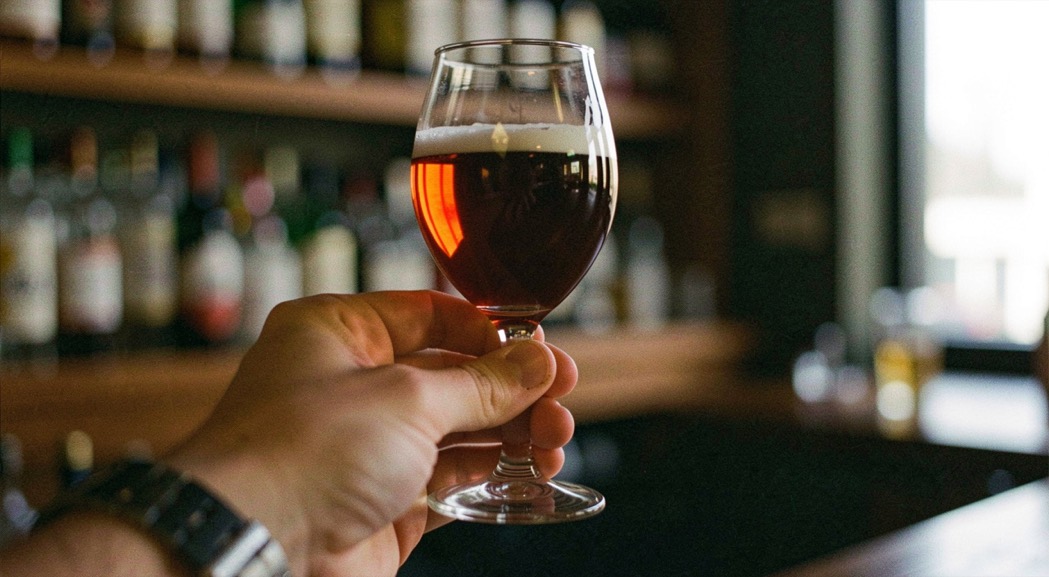
A useful habit behind the bar is to treat every bottle as a small report from a place. The grape family tells you what the vine was bred to do. The balance of a dry riesling tells you what a season and a cellar did with it. A solera vinegar tells you what time and wood did after the wine was finished. Read all three and you stop guessing at origin from the front label. That thread continues in Pilsner, tulip, nonic: reading a glass by its waist.
For a German-language treatment of the same questions, from vineyard cycle to barrel and steel, origin in the glass is covered in detail by Fass & Feld, an independent magazine on wine, origin and craft seen from Germany. A longer note on the same subject sits in The cocktail shelf beside the beer fridge.
What does the grape family tell you before you taste?
Grape family is the first filter. It narrows what a wine can plausibly be before you smell it. The Burgundian family, for instance, includes Pinot Noir, Chardonnay, Gamay and the lesser-known Schwarzriesling, which is Pinot Meunier under a German name. These varieties share thin skins, relatively early ripening and a tendency to show red fruit, earth and a certain transparency rather than density. When a bottle from this family tastes heavy and opaque, something in the vineyard or the cellar pushed it there, and that push is itself information about origin.
Riesling sits in a different family and behaves differently. It ripens late, holds acidity well and transmits site very directly. That is why two rieslings grown an hour apart can taste like different places even when the winemaker used the same yeast and the same steel tank. The family sets the range of what is possible. The site and the season decide where inside that range the wine lands.
At the bar, use this as a sorting tool. If a guest asks for something crisp and mineral, you are already inside the riesling range. If they want red fruit and a lighter body, the Burgundian family is the faster answer. Knowing the family saves you from recommending by color alone.
How do you taste a dry riesling between acidity and extract?
Dry riesling is a balance problem, and the two forces are acidity and extract. Acidity is the sharp, mouth-watering sensation, measured roughly as tartaric and malic acid. Extract is everything dissolved in the wine that is not sugar or alcohol: glycerol, phenolics, minerals, proteins. A dry riesling with high acidity and low extract tastes lean and can feel aggressive. The same acidity with more extract tastes firm but complete, because the extract gives the acid something to sit on.
Practical tasting order matters. Chill the bottle to around 10 to 12 degrees Celsius. Warm riesling pushes alcohol forward and flattens the fruit. Pour a small measure, smell first for citrus, green apple, stone and sometimes a smoky or flinty note. Then taste and hold the wine for a few seconds before swallowing. The question is not whether it is acidic. It is whether the acid is carried.
Alcohol is the third variable. A dry riesling at 12 percent alcohol will feel different from one at 13.5 percent, even at the same acidity. Higher alcohol adds body and sweetness on the palate, which can mask a lack of extract. If a wine tastes broad and slightly hot but thin in the middle, alcohol is doing work that extract should be doing.
For the home bar, the useful test is food. A dry riesling with good extract handles salty and fatty food because the acid cuts and the extract buffers. A lean, high-acid riesling without extract will taste harsh next to the same dish. Serve the leaner bottle as an aperitif and keep the fuller one for the table.
Why does a solera vinegar taste older than it is?
A solera is a stacked system of barrels, not a single vessel. Wine or vinegar moves through a series of stages, with younger liquid topping up older liquid, and a portion drawn off from the oldest stage for bottling. Nothing is ever fully emptied. The result is a blend that always contains a fraction of very old material, which is why a solera vinegar tastes older than its youngest component.
For balsamic-style vinegar, the wood matters as much as the time. Oak, chestnut, cherry, juniper and mulberry barrels each contribute different tannins, aromas and rates of evaporation. The vinegar concentrates as water passes through the wood, so acidity, sugar and aroma all rise together. A long solera produces a dark, syrupy vinegar with dried fruit, wood and a sweet-sour tension that no shortcut reproduces.
In the kitchen, treat solera vinegar as a seasoning, not a dressing base. A few drops on strawberries, on aged cheese or over roasted vegetables add depth without the sharp burn of young vinegar. Because it is concentrated, it also reduces well, though the aroma compounds are volatile, so add it late in cooking rather than at the start.
The same logic applies to spirits made from fruit. Obstbrand is distilled from fruit, while Weinbrand is distilled from wine, and the distinction is a production fact, not a marketing one. Both are ways of capturing origin in a stable form, and both reward the same attention you give a bottle of wine.
How do you read origin without trusting the label?
Labels describe intent. The glass describes result. To read origin, work from the physical evidence in the order it was created. First, the grape family, which sets the possible range. Second, the season and the site, which appear as ripeness, acidity and extract. Third, the cellar, which shows up as oak, lees, fermentation style and, in vinegar, the solera chain.
A practical method for the home bar is to keep three reference bottles. One dry riesling you know well, one red from the Burgundian family, and one solera vinegar. Taste each before you taste anything new. The references calibrate your palate the way a known weight calibrates a scale. Without them, every wine is judged against memory alone, and memory drifts.
This is also why direct sales at the winery are useful. When you buy at the domain, you can ask which vineyard, which fermentation vessel and how long the wine stayed on the lees. Those answers are the origin, stated in process rather than poetry. The bottle is the same; the information is better.
What should you keep on the shelf for this kind of tasting?
You need less equipment than people assume. A good corkscrew, two or three glasses of the same shape so comparisons are fair, a pitcher of water, and a spit cup if you are tasting several wines. A thermometer helps more than any gadget: riesling served too warm loses its precision. For vinegar, a small dropper or a tasting spoon lets you dose accurately, because a little goes a long way.
Storage matters too. Dry riesling holds well for several years when kept cool and dark, and it improves if the acidity and extract are in balance to begin with. Solera vinegar does not need refrigeration and is stable for years, but it should be kept closed because it evaporates and absorbs odors. Fruit brandy is best kept upright and away from light.
The point of all of this is not to become a judge of regions. It is to make each bottle tell you something specific. Grape family, the acid and extract balance of a dry riesling, and the barrel chain behind a solera vinegar are three readable signals. Use them and the glass stops being a mystery and starts being a document.
Filed under Beer culture. Published September 15, 2026.