Darts at home: height, throw line, wall
Two numbers decide whether the board on your wall plays like a board in a pub or like a private variant nobody else can score on. Everything else is about protecting the plaster and killing the shadow.
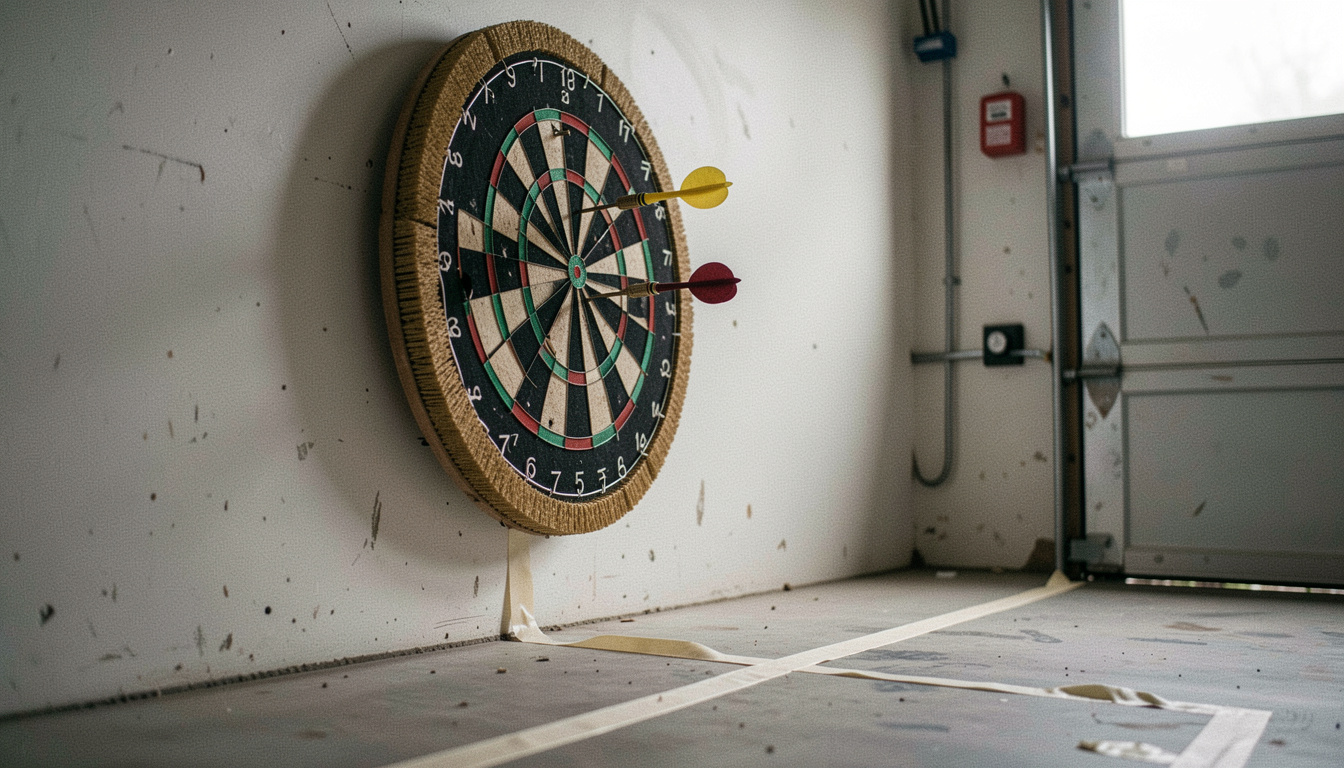
A dartboard is one of the few things in a home bar with genuinely fixed dimensions. They are the same in every pub, every league and every televised match, which means a board hung by eye is a board that quietly teaches you the wrong throw.
The two numbers
- Bullseye height: 1.73 m (5 ft 8 in) from the floor. Measured to the centre of the bull, not to the top or the bottom of the board.
- Throw distance: 2.37 m (7 ft 9.25 in). Measured horizontally from the face of the board to the near edge of the oche, the line you throw from.
Both are measured from the board face, which is a detail people miss when the board is on a cabinet or a bracket that stands it off the wall. Measure from where the darts land.
The diagonal check
Run a tape from the centre of the bullseye down to the near edge of the throw line. It should read 2.93 m (9 ft 7.5 in). If it does not, one of your two measurements is wrong, and the diagonal will not tell you which, so check both again.
This check exists because floors are rarely level and walls are rarely plumb. A board hung correctly against a wall that leans back by two degrees is not at 1.73 m where it matters.
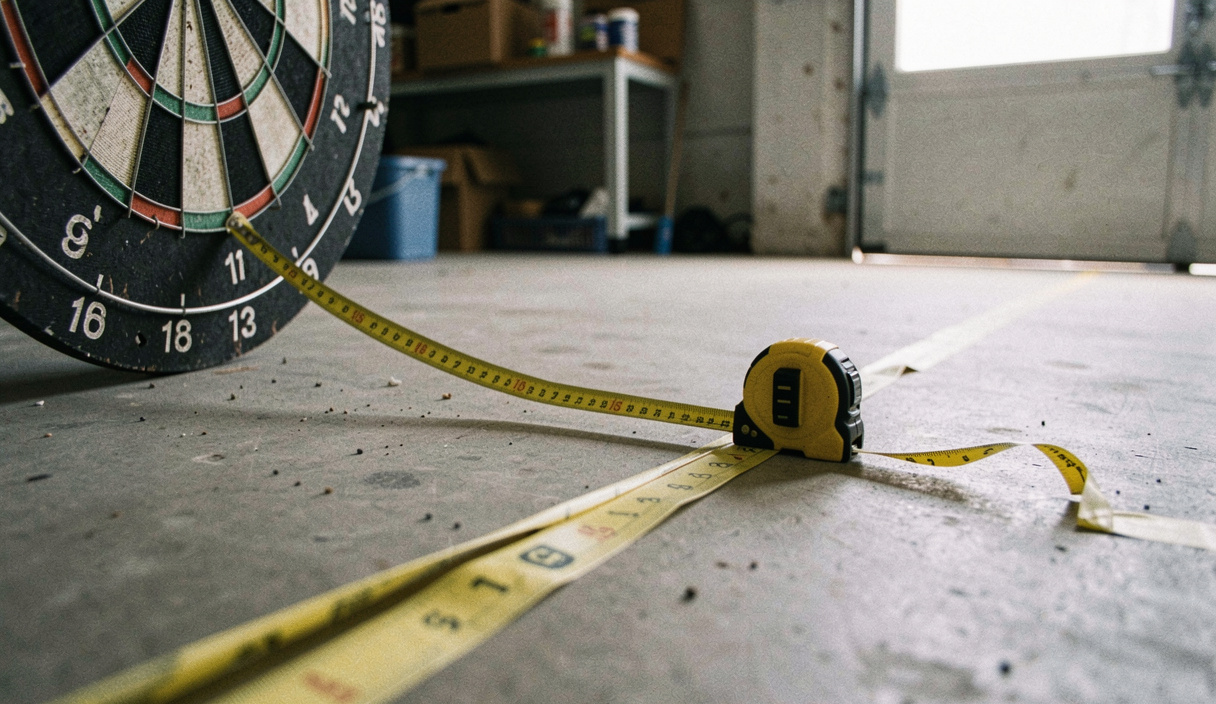
Clearance and where the board goes
Behind the throw line you want at least 1.5 m of clear floor, because players step back and shift their weight. In front of the board you want nothing at all: no shelf, no light fitting at head height, no door that opens into the throwing lane.
Keep the centre of the board at least 60 cm from any side wall, or your own knuckles will meet the corner on a throw at the 11 or the 6. And do not put a dartboard opposite a doorway. Somebody will eventually walk through it, and darts travel at a speed that makes that a genuinely serious idea rather than a comic one.
What goes behind and around it
A bristle board made of compressed sisal closes up behind the dart and lasts for years. Darts that miss it entirely go into whatever is behind, so plan for that.
- A foam catch ring that clips around the board is the tidiest answer and the one that takes ten seconds to fit.
- A 60 by 60 cm panel of cork or dense EVA foam behind the board covers a wider miss and can be painted.
- A sheet of MDF or ply behind the board protects plaster but chips the points of your darts, so it is a last resort.
- A cabinet with doors solves the wall, the storage and the scoreboard in one object, and it also gives you the standoff you need to remember when measuring.
On the floor, a dart mat with the oche printed on it does three jobs: it fixes the distance so nobody re measures, it saves the tiles from dropped darts, and it stops bounce outs skidding under furniture. Buy the one that matches the printed distance to the number above.
Lighting, and the shadow of your own hand
A single light above and behind the thrower puts the shadow of the darts and of the throwing hand straight across the top of the board, which is where the treble twenty lives. It is the most common lighting mistake in a home setup and it is the one that actually costs you scores.
The fix is light from the front and sides. A purpose made dartboard light ring surrounds the board and lights it evenly from all around; two lamps set at about 45 degrees either side of the board achieve most of the same thing. Keep the source out of the thrower's eye line and above the top of the board.
Keeping the board alive
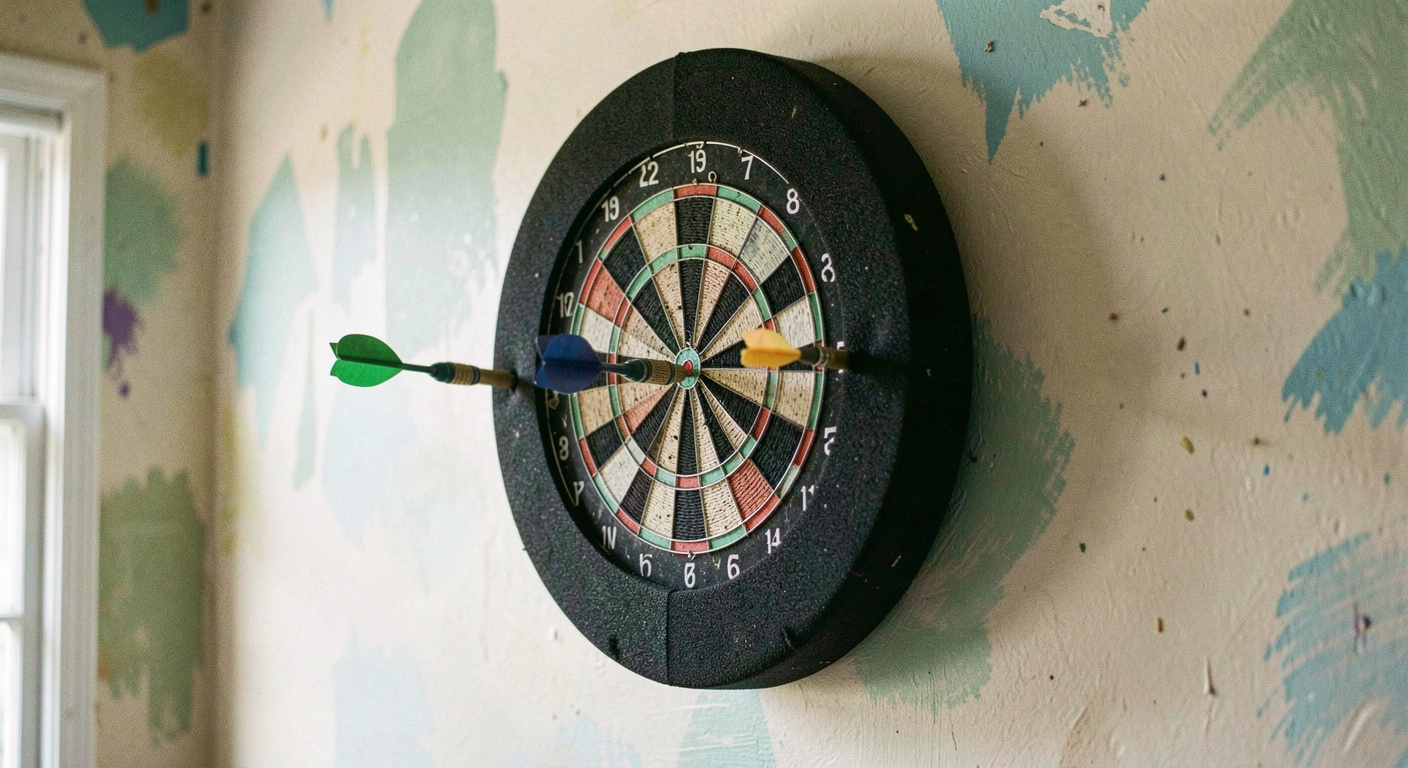
Sisal wears where the darts land, which means the 20 segment goes first. Rotate the board every few weeks so a different number sits at the top; the wires lift off or the board unscrews and turns on its mounting. A rotated board lasts several times longer than one left in place.
Never soak a bristle board and never leave it in a damp garage over winter. The sisal swells, the board goes soft, and it never comes back. And take the darts out of it when you finish for the night, because darts left in a board keep the fibres apart.
Where it sits in the room
A dartboard needs a lane of floor about 4 m long and 1.5 m wide that nobody has to cross. In a garage that is usually along one wall, which is the same wall a pong table would otherwise want, so decide which of the two owns the space before you drill anything. The table has its own footprint requirements, set out in setting up a pong table that does not wobble.
If the room is small enough that the throwing lane is also the route to the drinks, the board is in the wrong place, and the right answer might be a game that lives on a table instead: the shortlist for that is in board games that survive a crowded table. Wherever it goes, apply the same rule as the rest of the bar and aim the light at the target rather than at the people, which is the argument made at length in back bar lighting without the glare.
Filed under Bar games. Published February 26, 2026.